

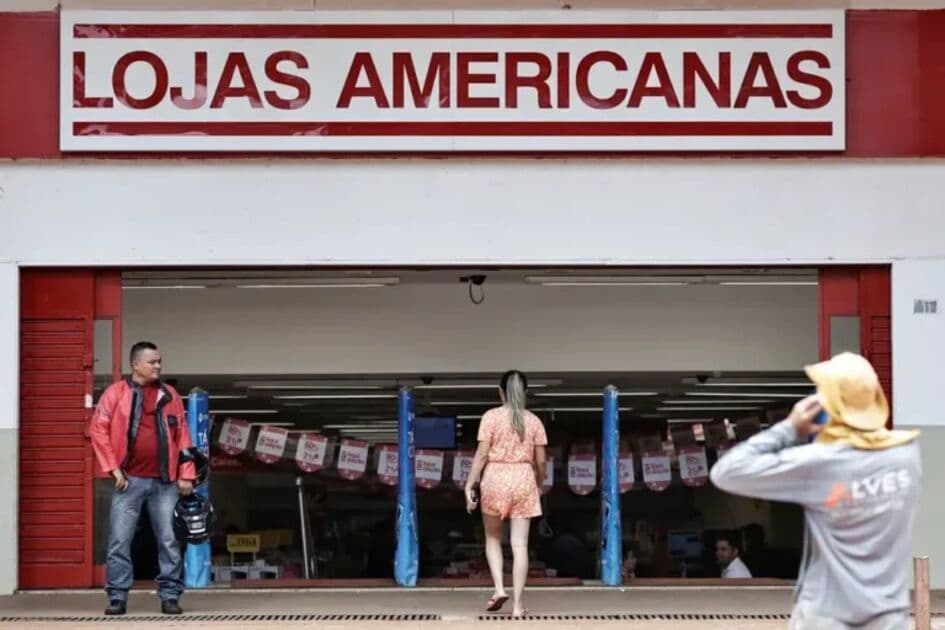
On March 25, 2026, Americanas (AMER3) filed a request to terminate its judicial recovery at the 4th Commercial Court of Rio de Janeiro. The news sent shares up 18.83% in a single session, closing at R$ 6.12. The market reacted with optimism. But the road to this point was brutal.
Three years ago, in January 2023, Americanas disclosed accounting inconsistencies initially estimated at R$ 20 billion. Weeks later, the figure was revised to over R$ 40 billion in fraud. Shares plunged 77% in a single day. The CEO and CFO, appointed just days before, resigned on the same day as the disclosure. The company entered judicial recovery eight days later, carrying R$ 43 billion in debts across 16,300 creditors.
The Americanas case is not just a corporate story. It is a case study on the risks every investor faces and the lessons the market keeps teaching.
What happened: the timeline
January 11, 2023: Americanas publishes a material fact disclosing "inconsistencies in accounting entries" of approximately R$ 20 billion. Newly appointed CEO Sergio Rial and CFO André Covre resign the same day.
January 12, 2023: Shares drop from R$ 12 to R$ 2.72, losing R$ 8.34 billion in market value in a single session.
January 19, 2023: The company files for judicial recovery, declaring R$ 43 billion in debts.
June 2023: The company reveals that the fraud, conducted by previous management, totaled over R$ 40 billion. The scheme used fictitious Cooperative Advertising Fund (VPC) contracts to inflate revenues and hide debts. Those involved: the former CEO, three former directors, and three former executives.
December 2023: The judicial recovery plan is approved with 97.19% adhesion by credit value and 91.14% by creditor count.
2024-2025: Operational restructuring. Asset sales, closure of unprofitable stores, pivot to physical retail. The company captures over R$ 2 billion in operational improvements.
March 25, 2026: Request to terminate judicial recovery. Q4 2025 net loss drops to R$ 44 million (from R$ 586 million in Q4 2024, a reduction of over 90%). Adjusted EBITDA of R$ 276 million.
What the numbers show
The recovery is real, but partial. The Americanas emerging from judicial recovery is a fundamentally different company from the one that entered it.
| Metric | Before (2022) | Now (Q4 2025) |
|---|---|---|
| Total debt | R$ 43 billion | Cash position exceeds debt |
| Quarterly loss | Billions | R$ 44 million |
| Adjusted EBITDA | Negative | R$ 276 million |
| Focus | E-commerce + physical | Physical stores |
| Shares (AMER3) | R$ 12 pre-crisis | R$ 6.12 |
Even with the 18% surge, shares are still roughly 50% below their pre-crisis price. Shareholders who held throughout the recovery lost half their capital. Those who sold in the panic lost up to 77%.
Lessons for investors
1. Accounting fraud does not give obvious signals
Americanas was audited by PwC, one of the four largest audit firms in the world. It had a board of directors with recognized names. It was listed on B3, covered by dozens of bank and brokerage analysts. None of them detected a R$ 40 billion scheme.
The lesson is not that auditing is useless. It is that auditing is not a guarantee. Financial reports can be manipulated by those with access and intent. Investors who rely exclusively on published numbers are delegating 100% of due diligence to third parties.
2. Concentration destroys wealth
Imagine an investor who, in December 2022, had 30% of their portfolio in AMER3. In a single day, they lost over 23% of their total investment. If they had 100% in AMER3, they lost 77%.
Diversification does not prevent losses. It prevents a single loss from destroying an entire portfolio. It is the difference between a setback and a ruin.
3. Corporate recovery does not mean investor recovery
Americanas may exit judicial recovery. The company may become profitable again. But a shareholder who bought at R$ 12 and holds at R$ 6.12 is still at a loss. Company recovery and investment recovery are different things.
In many judicial recoveries, original shareholders are the last to receive anything. Creditors are prioritized. Shares are diluted. Market value may never return to pre-crisis levels.
4. Markets punish fast and forgive slowly
The 77% drop happened in one day. The 18.83% recovery happened three years later, and the price is still at half. Markets are asymmetric: they destroy value far faster than they rebuild it.
This asymmetry is one of the strongest arguments for risk management. Losing 50% requires a 100% gain to break even. Losing 77% requires a 334% gain.
| Loss | Gain needed to recover |
|---|---|
| 10% | 11.1% |
| 25% | 33.3% |
| 50% | 100% |
| 77% | 334% |
5. Due diligence goes beyond the balance sheet
What could have alerted an attentive investor before the crisis?
Governance: Americanas' previous management concentrated excessive power. The CEO remained in office for years without significant rotation in financial leadership positions.
Business model under pressure: Brazilian retail had been losing margin to marketplaces like Mercado Livre and Shopee. Americanas was trying to compete in e-commerce with increasingly thin margins, a sign of operational stress.
High leverage: even before the fraud was revealed, Americanas operated with high debt relative to cash flow. High debt + pressured margins = elevated risk.
None of these signals, individually, indicated fraud. But together, they painted the portrait of a company under pressure, the type of environment where fraud historically occurs.
What Americanas means for the Brazilian market
The exit from judicial recovery is positive for the market as a whole. Extended JR processes create uncertainty for creditors, suppliers, and competitors. The closure signals that the system works: companies can restructure, pay creditors, and resume operations.
But the case also permanently raised the level of scrutiny over corporate governance in Brazil. The CVM (Securities Commission) and B3 tightened transparency requirements. Auditors face greater pressure to identify inconsistencies. Institutional investors demand stronger internal controls.
If this results in a more transparent and better-governed market, the legacy of the Americanas crisis will have been, paradoxically, positive.
The role of professional management
The Americanas case illustrates why many investors, especially those who lack the time or expertise for deep fundamental analysis, choose professional management models rather than building individual portfolios.
When you select stocks on your own, the responsibility to analyze balance sheets, evaluate governance, monitor sector risks, and react to crises is entirely yours. In a managed model, this analysis is performed by a dedicated team, with daily operations and disciplined risk management.
At Royal Binary, founded by Sidnei Oliveira, we execute over 340 trades per month with a 50/50 profit-sharing model. Risk management is the core of the operation, not an add-on. Every trade follows predefined stop-loss rules and position sizing, exactly the kind of discipline that protects capital during crises.
To learn about our plans and how the model works, visit app.royalbinary.io.