

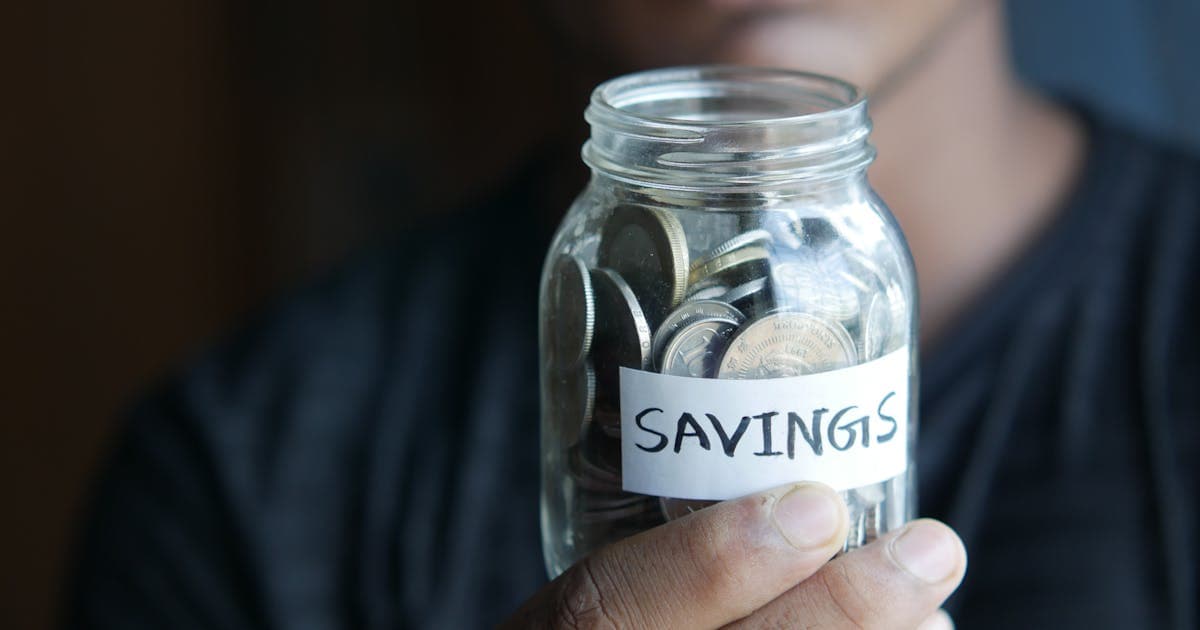
Brazil's financial stress indicators make an uncomfortable picture in 2026. Serasa Experian reports 81.7 million Brazilians in default — the highest number on record. The IPCA inflation index hit 4.71% in the April 2026 Focus Bulletin projections, breaching the 4.50% ceiling of the government's official target band for the first time. And the Selic rate, while falling, remains at historically elevated levels projected to end 2026 near 12.50%.
Against this backdrop, the emergency fund is not a secondary concern. It is the foundational layer of any household financial structure. But the questions of how much to keep, where to keep it, and what it actually needs to do are worth answering with precision rather than generic rules.
What an emergency fund actually does
An emergency fund has one job: to cover necessary expenses during a period when your primary income is disrupted — job loss, medical emergency, major unplanned expense — without forcing you to sell investments at a bad time, take on expensive debt, or default on obligations.
This framing matters because it clarifies what the fund should not do: it should not be optimized for returns. It should be optimized for availability and capital preservation. These are different objectives than any other component of a financial plan.
The failure mode of an underfunded emergency fund is visible in the Serasa data: many of those 81.7 million defaulting Brazilians are not irresponsible — they encountered income disruptions without adequate liquid reserves and defaulted on obligations they would otherwise have paid.
How much is enough
The conventional guideline is 6 to 12 months of essential expenses. This range is not arbitrary — it reflects research on how long income disruptions typically last and how long it takes most people to recover.
The range, not the point estimate, matters. Where you fall within it depends on several factors:
Employment stability: A CLT employee with 3+ years of tenure at a stable company, protected by FGTS and severance rights, faces lower acute income-disruption risk than a self-employed person, a business owner, or someone in a commission-heavy role. The latter group should target 12 months; the former can operate closer to 6.
Fixed monthly obligations: The more fixed obligations you carry (mortgage, car payment, school fees), the larger your reserve needs to be in absolute terms. A household with R$3,000 in monthly fixed costs needs a different reserve than one with R$1,000.
Dependents: Single individuals without dependents can accept more volatility. Households with children, elderly parents, or other dependents need more buffer.
Alternative liquidity: If you have investments that could be liquidated quickly without large losses (stocks, FIIs), you have a secondary buffer. This does not replace an emergency fund — selling equities in a downturn to cover expenses is exactly the behavior an emergency fund prevents.
Where to keep the emergency fund in 2026
This is where the current rate environment creates a specific opportunity. With the Selic near 14.75% and projected to end 2026 at 12.50%, keeping emergency fund money in instruments that track the Selic means earning a meaningful real return while maintaining liquidity.
The three primary options, evaluated:
Tesouro Selic: Government bonds that track the Selic rate daily. Currently yielding approximately 14.75% per year. Liquidity: you can redeem on any business day with same-day settlement (D+1 for the funds to clear). Risk: near-zero for credit, since it is a direct obligation of the federal government. The primary risk is that the government itself defaults, which would require a scenario far beyond the concerns of individual financial planning. Cost: small management fee (0.2% per year) charged by brokerages, plus Banco Central's 0.1% fee. Total returns net of fees are approximately Selic minus 0.1%.
CDB com liquidez diária (daily liquidity CDB): Bank certificates of deposit from reliable institutions that can be redeemed on any business day. The best offerings from digital banks pay 100–105% of CDI (the interbank rate, which closely tracks Selic). Credit risk: these are covered by FGC (Fundo Garantidor de Créditos) up to R$250,000 per institution. This means if the bank fails, you recover up to R$250,000. Keep reserves at institutions where this coverage is not close to being exceeded.
Poupança (savings account): The historical default for Brazilian emergency funds. Currently yields approximately 6.17% per year (when Selic is above 8.5%, poupança pays 70% of Selic). Against a 4.71% IPCA, poupança still preserves real value — just barely. But Tesouro Selic and quality CDBs offer materially better returns with equivalent or superior liquidity. There is no longer a practical reason to keep an emergency fund in poupança.
| Instrument | Approximate Yield (2026) | Liquidity | Credit Risk | FGC Coverage |
|---|---|---|---|---|
| Tesouro Selic | ~14.65% net | D+1 | Federal govt | N/A |
| CDB liquidez diária (100–105% CDI) | ~14.5–15.3% | Same day | Bank | Up to R$250K |
| Poupança | ~6.17% | Same day | Bank | Up to R$250K |
The inflation factor
At 4.71% projected IPCA, the real return (return above inflation) on Tesouro Selic is approximately 10 percentage points. This is unusually high — it reflects Brazil's current high-rate environment. The opportunity cost of keeping money liquid is lower than it has been historically, because the gap between short-term liquid rates and longer-term investment returns is smaller when rates are this high.
Practically: in 2026, you are not giving up much by keeping 6 months of expenses in liquid instruments. This is not always true. When the Selic eventually falls to 6–8% and inflation remains near 3–4%, the real return on liquid savings will compress significantly, and the trade-off calculation changes.
How to build it if you don't have one
If you currently lack an emergency fund, the approach is straightforward: set a target (calculated as monthly essential expenses multiplied by your target months), identify the shortfall, and direct savings to Tesouro Selic or a daily-liquidity CDB until the target is met before allocating to other investment objectives.
This is not a complex optimization problem. It is a matter of sequencing: the emergency fund before discretionary investing, because the expected cost of not having one — being forced into expensive debt or default during an income disruption — is very high.
What the emergency fund does not cover
An emergency fund covers income disruption and unexpected necessary expenses. It does not cover:
- Planned large expenses (car replacement, major home repair): these should be budgeted separately
- Investment volatility: if your stock portfolio falls 30%, that is not what the emergency fund is for
- Chronic overspending: an emergency fund depleted by regular budget deficits is not functioning as designed
The precision matters because the fund is finite. Keeping its purpose narrow preserves its function.
At Royal Binary, we support investors at every stage — from establishing financial foundations to active market participation. If you'd like to understand how we help clients think about financial structure, explore our platform.