

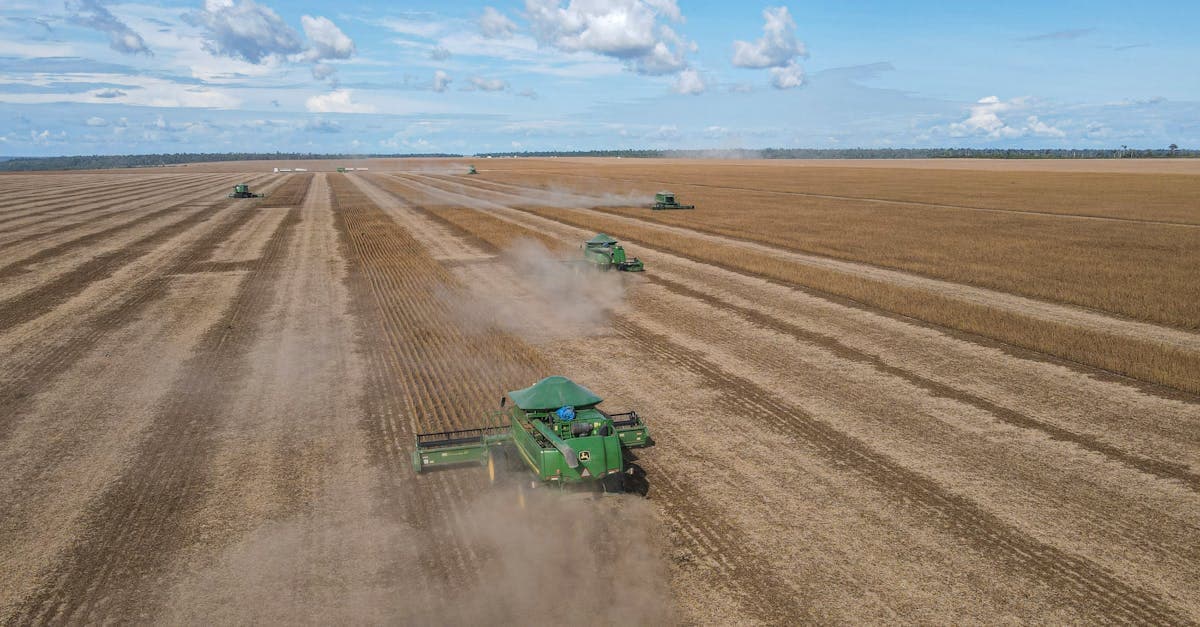
Brazil's agribusiness sector generates roughly US$ 270 billion in annual output and accounts for approximately 25% of the country's GDP. The country is the world's largest exporter of soybeans, coffee, sugar, orange juice, chicken, and beef. Yet for decades, financial access to that entire supply chain was limited to major corporations, public banks, and government-subsidized rural credit lines.
That changed in 2021 with the creation of Fiagros.
Four years later, the asset class has surpassed 585,000 registered shareholders on B3, accumulated total net assets of roughly R$ 11.5 billion, and delivers annualized dividend yields that compete directly with other income-tax-exempt fixed-income instruments. With Brazil-China bilateral trade reaching a record US$ 171 billion in 2025 and the Selic rate heading toward 12.25% by year-end 2026, understanding this instrument has become more relevant than ever.
What a Fiagro is
Fiagro stands for Fundo de Investimento nas Cadeias Agroindustriais — Investment Fund in Agro-Industrial Chains. It was created by Law 14.130, signed on March 29, 2021. The most common analogy is the "FII of agribusiness": just as Brazilian Real Estate Investment Funds (FIIs) pool assets and rental income from the real estate sector into tradeable shares on the exchange, Fiagros do the same for the agro-industrial sector.
In practice, a single Fiagro share traded on B3 can provide exposure to agribusiness receivable certificates (CRAs), corporate bonds from agro companies, rural land, farms, or equity stakes in sector companies. The investor buys shares, receives periodic income distributions, and has daily liquidity through the secondary market on B3.
The most important tax point: like FIIs, income distributed by Fiagros is exempt from income tax for individual investors (pessoas físicas), provided the fund has at least 50 shareholders and no single shareholder holds more than 10% of total shares. Capital gains on the sale of shares, however, are taxed at a flat rate of 20%.
Info
The income tax exemption on Fiagro distributions follows the same legal framework that applies to FIIs. For individual investors in Brazil, this means the net yield is systematically higher than comparable taxable instruments like regular CDBs, which are subject to a progressive withholding tax schedule.
The three Fiagro modalities
Law 14.130/2021 and subsequent CVM regulations allow Fiagros to be structured in three distinct formats, each with a different risk profile, portfolio composition, and investor audience.
Fiagro-FIDC: agribusiness receivables
The Fiagro-FIDC replicates the structure of Credit Rights Investment Funds (FIDCs), but with an exclusive focus on agribusiness receivables. In practice, the fund purchases the right to receive future payments from rural producers, cooperatives, trading companies, and input suppliers.
Concrete example: an agrochemical distributor sells products on credit to farmers, with payment due in 90 days. A Fiagro-FIDC can advance that receivable, paying the distributor immediately and collecting the farmer's payment at maturity. The spread between the discounted purchase price and the face value is the fund's yield.
This model results in shorter-duration portfolios, more predictable income, and credit risk concentrated in the quality of the underlying debtors — rural producers and cooperatives. It is the format closest to conventional fixed income within the Fiagro universe.
Fiagro-FII: rural real estate and rural credit
The Fiagro-FII replicates the FII structure but focuses on the rural sector. It can invest directly in agricultural properties (farms, silos, grain warehouses, agro-industrial facilities), in CRAs backed by rural real estate, or in rural bank bonds (LCAs).
This modality is the most accessible for retail investors. Funds like RURA11 (managed by Kinea) and BTRA11 (BTG Pactual Agricultural Land) fall into this category. RURA11 closed January 2026 with an accounting result of R$ 18.5 million, a 20% increase over the prior month, distributing R$ 0.12 per share with an annualized yield of approximately 14.9% on net asset value. BTRA11 committed to distributing at least R$ 0.90 per share per month throughout 2026, nearly double the average R$ 0.43 paid in the previous year.
Fiagro-FIP: equity stakes in agro companies
The Fiagro-FIP replicates the Private Equity Fund (FIP) structure, focusing on unlisted companies operating across the agro-industrial supply chain. The objective is investment in companies at development or consolidation stages, such as agtech startups, grain processing businesses, or rural logistics operators.
This is the highest-risk, lowest-liquidity modality. Investment horizons typically span five to ten years, with exits via IPO or strategic sale. For retail investors, direct access to Fiagro-FIPs is generally restricted to qualified investors.
Tip
For investors new to Fiagros, Fiagro-FII is the most natural entry point: accessible shares traded on B3, monthly tax-exempt income distributions, and portfolios composed mainly of CRAs and rural properties. Fiagro-FIDC offers more predictable returns; Fiagro-FIP requires a sophisticated investor profile.
How the income tax exemption works in practice
Fiagro taxation follows the same logic as FIIs. For individual investors, the exemption applies to distributed income — the monthly dividends paid by the fund, derived from CRA interest, rural property rental income, and other portfolio assets.
The practical difference becomes clear in a comparison with taxable instruments. A CDB paying 100% of CDI at 14.75% per year yields approximately 12.54% net for investments held over two years (after 15% income tax). A Fiagro with a 13% annualized dividend yield delivers 13% net for an individual investor, with no income tax on distributed earnings.
That gap, which seems modest in nominal terms, widens as the Selic falls. When the benchmark rate drops to 12.25% per year, an equivalent CDB would yield around 10.41% net, while the Fiagro preserves its gross yield as net yield. Tax exemption is worth more in a lower-rate environment.
Important: the 20% capital gains tax still applies to the sale of shares at a profit. The exemption covers only income distributions.
The leading Fiagros in 2026
With the sector surpassing 585,000 shareholders and R$ 11.5 billion in aggregate net assets, certain funds stand out for liquidity, distribution consistency, and investor base.
SNFZ11 (Singulare): distributed a stable R$ 0.10 per share, with an annualized dividend yield of 12.97%. The fund surpassed 10,000 shareholders and recorded financial results of R$ 1.33 million in the period, demonstrating consistent cash generation.
RURA11 (Kinea Rural): accounting result of R$ 18.5 million in January 2026, with an annualized yield of 14.9% on net asset value. Kinea, which also manages the largest share of the IFIX index at 17.25% representation, is one of the most recognized managers in the FII and Fiagro space.
BTRA11 (BTG Pactual Agricultural Land): focused on farmland and CRAs. With its commitment of R$ 0.90 per share per month in 2026, it represents a direct bet on rural land appreciation and agribusiness receivables.
Other funds tracked by specialized analysts include KFOF11 (Kinea) and structures managed by XP Asset, Itaú Asset, and JGP, whose portfolios combine high-quality CRAs with positions in rural properties and agtech.
Fiagro, direct CRA, or FII: how to compare
All three instruments offer income tax exemption on distributions for individual investors and exposure to productive sectors of the economy. But they have meaningful structural differences.
Direct CRA is a credit security issued by securitization companies, backed by agribusiness receivables. The investor buys the note and receives interest (fixed rate, CDI+, or IPCA+) until maturity. The IR exemption applies to individuals. The drawbacks: limited secondary market liquidity, typically high minimum tickets (R$ 1,000 to R$ 10,000+), and credit risk concentrated on the issuer or receivables pool. Selling before maturity can mean a significant discount.
FII invests in urban real estate — logistics warehouses, corporate offices, shopping malls — or in real estate credit securities (CRIs). The income tax exemption on dividends is equivalent to that of Fiagros. The key difference: FIIs have no exposure to agribusiness. In 2026, with the agricultural sector attracting international capital flows, agro carries specific catalysts that urban real estate does not fully share.
Fiagro combines the exchange-traded fund structure (daily liquidity, accessible share prices) with agribusiness exposure (CRAs, farmland, corporate bonds). The disadvantage compared to a direct CRA: the share price can trade at a premium or discount to net asset value. The advantage: diversification, professional management, and smaller minimum investment.
| Instrument | IR Exemption (Individual) | B3 Liquidity | Min. Investment | Main Risk |
|---|---|---|---|---|
| Direct CRA | Yes | Low (secondary) | R$ 1,000+ | Credit/issuer |
| FII | Yes | High | R$ 10–50/share | Vacancy/management |
| Fiagro | Yes | Moderate | R$ 10–100/share | Agro/credit/climate |
The 2026 context: why now
Three simultaneous shifts make Fiagros particularly relevant at this moment.
Brazilian agribusiness at the center of global trade. U.S. tariffs made American soybeans more expensive for Asian buyers, and China intensified purchases in Brazil. Bilateral trade hit US$ 171 billion in 2025, a historical record. That flow strengthens Brazilian exporter revenues and, by extension, the quality of the receivables backing Fiagro-FIDC portfolios and CRAs.
A falling Selic changes the equation. Brazil's central bank cut the Selic from 15% to 14.75% in March 2026, with the Focus survey projecting the rate at 12.25% by December. In that environment, the income tax exemption of Fiagros becomes proportionally more valuable: a taxable instrument loses competitiveness faster than a tax-exempt one as rates decline.
International capital moving into the sector. Global asset managers are building positions in Brazilian agribusiness assets, attracted by the combination of scale, competitive cost structure, and a favorable exchange rate. This movement is expected to deepen the secondary market for Fiagro shares and expand liquidity over coming years.
Info
Brazil closed 2025 as the world's largest exporter of soybeans, coffee, sugar, chicken, and beef. Bilateral trade with China reached US$ 171 billion, driven by purchasing reallocation driven by U.S. tariffs. This is the structural backdrop behind Fiagro's growth as an asset class.
Risks that deserve attention
The favorable backdrop for Fiagros does not eliminate structural and cyclical risks that investors need to understand.
Climate risk. Agribusiness is vulnerable to climate events: El Niño, La Niña, droughts, and frost. A damaged soybean harvest in Mato Grosso or a severe freeze in Paraná can affect farmers' ability to repay the receivables backing Fiagro portfolios. This risk is diffuse but not negligible.
Commodity price risk. Soybean, corn, coffee, and sugar prices fluctuate with global supply, currency movements, and Chinese demand. A slowdown in China's economy or an unexpected resolution of the U.S.-China trade war could reduce demand for Brazilian exports, pressuring sector revenues and, indirectly, the quality of assets in Fiagro portfolios.
Liquidity risk. The secondary market for Fiagro shares is less liquid than that of established FIIs. In periods of market stress, selling shares quickly may require accepting a significant discount to net asset value. Investors with short time horizons should factor this in.
Concentrated credit risk. In Fiagro-FIDCs with poorly diversified portfolios, default by a cluster of rural producers can materially impact the fund's results. Reading management reports and analyzing portfolio composition before investing is essential.
Tax reform risk. The debate over taxing exempt funds remains open in Brazil. Any legislative change that reduces or eliminates the income tax exemption on Fiagro distributions would directly affect the attractiveness of the asset class. Historically, lawmakers have maintained fiscal incentives for instruments that finance priority activities like agribusiness, but the risk exists.
Warning
Fiagros are variable-income assets. Shares fluctuate on the secondary market, dividends are not guaranteed, and the fund's net asset value can decline. Past performance does not guarantee future results. Always read the management report, review portfolio composition, and check the distribution history before making any investment decision.
How to invest in Fiagros
The process is the same as buying any fund listed on B3.
-
Open an account with a brokerage authorized to operate on B3. Major Brazilian platforms already list available Fiagros with data on net assets, dividend yield, and distribution history.
-
Research available funds. Platforms like Investidor10, Status Invest, and Funds Explorer provide up-to-date comparisons of net assets, returns, and portfolio composition. Fiagro tickers end in 11 (RURA11, BTRA11, SNFZ11).
-
Read the management report. Every Fiagro publishes a monthly report covering portfolio composition, financial results, default rates, and outlook. It is the most important source for evaluating fund quality.
-
Consider liquidity. Check the average daily trading volume of the shares. Funds with very low volume carry greater liquidity risk.
-
Diversify. Concentrating in a single Fiagro increases specific credit risk. A portfolio with two or three funds from different managers, with different focuses (rural FII, FIDC, blended), distributes sector risk more effectively.
Where Fiagros fit in a portfolio
Fiagros do not replace, but complement, other fixed-income and equity instruments. For investors who already hold positions in urban FIIs, adding a Fiagro brings exposure to a different sector, with distinct catalysts (currency, commodities, export policy) and equivalent tax treatment.
For investors considering direct CRAs, Fiagros offer diversification, professional management, and exchange liquidity — at the cost of less control over specific securities and exposure to share price volatility.
In a scenario where the Selic is converging toward 12.25% by December 2026, and with Brazilian agribusiness attracting international capital, Fiagros deserve a place on the radar of any investor seeking tax-efficient income.
At Royal Binary, Sidnei Oliveira and the trading team track the major macroeconomic flows shaping market behavior — including the impact of Chinese commodity demand on Brazilian assets and shifting interest rate dynamics. To explore how active management operates in these environments, visit app.royalbinary.io.