

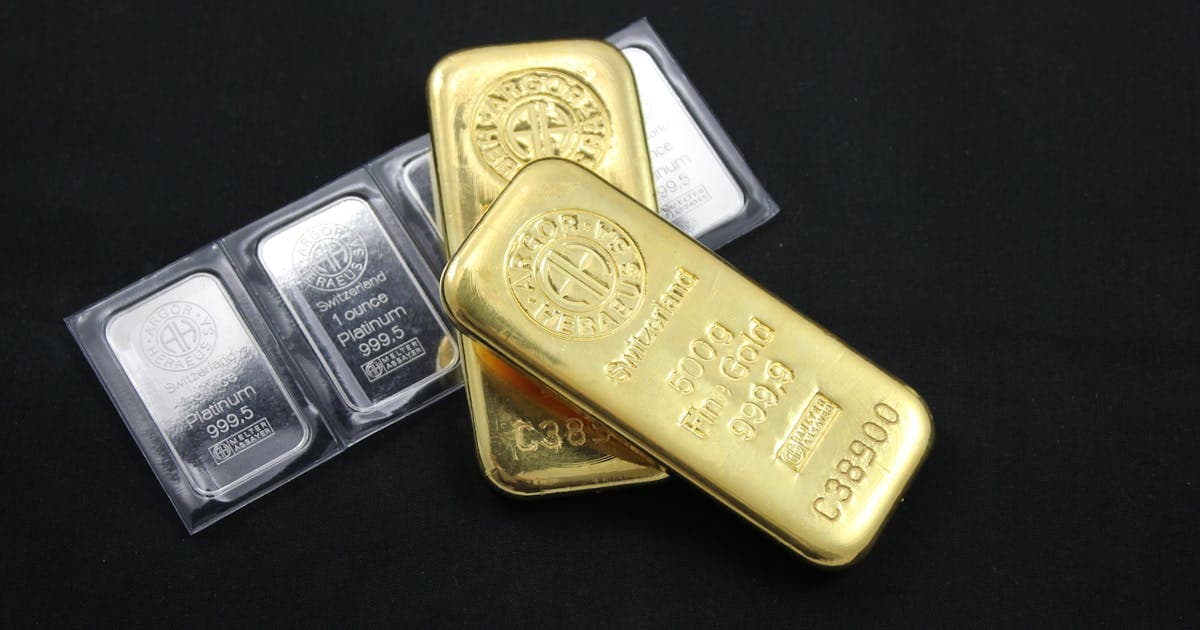
On January 29, 2026, gold touched $5,594 per troy ounce — the highest price ever recorded in the metal's history. The number alone would be remarkable. What is more relevant is the context: in just over a year, gold appreciated approximately 24%, a gain of roughly $1,000 per ounce.
We published an earlier piece in March covering gold's climb to $5,589. This is an update. The metal broke through that ceiling, set a new all-time record, and has since gone through one of the most counterintuitive dynamics of its recent history: the war between the US, Israel, and Iran — which erupted in February 2026 — initially pushed gold down, not up.
Understanding why that happened is essential for any investor who wants to evaluate gold as a serious part of their strategy.
The January record and what caused it
The peak of $5,594 on January 29 arrived before the Middle East conflict. The forces that drove gold there were already well-documented: accelerated buying by central banks, expectations of Federal Reserve rate cuts, a weakening US dollar, and reserve diversification by emerging economies looking to reduce exposure to the US-centered financial system.
The figure represents an appreciation of approximately 24% from pre-2026 levels, equivalent to roughly $1,000 per ounce of gain. For investors holding positions in gold ETFs or metal-linked funds, the portfolio impact was substantial.
Info
Gold ended 2025 with a cumulative return of over 60%, outperforming the S&P 500, Bitcoin, and virtually every major asset class in the period. The 24% gain up to the January 2026 record represents the continuation of a move that ran for more than 14 consecutive months.
The Iran war paradox
On February 28, 2026, the US and Israel launched coordinated strikes against Iran. The conflict effectively closed the Strait of Hormuz — through which 20% of global oil passes — and sent Brent crude from $71 to over $112 per barrel within weeks.
The intuitive expectation would be for gold to surge on the war. After all, in virtually every geopolitical conflict of the past several decades, the metal has functioned as a safe haven. This time, that is not what happened.
The reason is technical but fundamental: the oil shock raised inflation expectations in the United States, which increased the probability that the Federal Reserve would slow or reverse its rate cuts. That strengthened the dollar and pushed up US real interest rates — two factors that historically pressure gold lower, because they increase the opportunity cost of holding a non-yielding asset.
The result: from its $5,594 high, gold fell approximately 25%, trading around $4,500 in April 2026. Investors who bought at the peak absorbed a sharp correction within a matter of weeks.
This episode does not invalidate gold as an asset class. It illustrates, with precision, that gold is not insurance against every type of risk. It is a specific hedge against monetary depreciation, real inflation, and loss of confidence in fiat currencies — not against wars whose side effects happen to strengthen the dollar.
What major banks project for the rest of 2026
The projections diverge significantly, which is itself useful information:
| Institution | Projection | Timeframe |
|---|---|---|
| UBS | $6,200 | Mid-2026 |
| UBS | $5,900 | December 2026 |
| J.P. Morgan | approaching $5,000 | 2026 |
| Goldman Sachs | $4,900 | December 2026 |
| Bloomberg (consensus) | $4,403 | Year-end 2026 |
UBS is the most bullish, projecting $6,200 by mid-year — which would imply new all-time records. The Bloomberg consensus is more conservative, suggesting the metal could end the year below its January peak. Goldman Sachs sits in between.
The spread in projections primarily reflects uncertainty around two factors: (1) the outcome of the Middle East conflict and its effects on the dollar and US rates, and (2) the pace of central bank purchases, which have sustained structural demand for the metal.
Tip
Major bank projections are rarely accurate in terms of precise levels. They are more useful as directional signals and indicators of where market consensus is clustering. A range of $4,400 to $6,200 for gold in 2026 says less about the exact price and more about the degree of uncertainty the analysts themselves are attributing to the asset.
Why the structural drivers remain intact
The 25% pullback from the high has not erased the reasons why gold appreciated over 60% in 2025. Those structural forces continue to operate:
Central bank buying. Central banks globally accumulated over 1,100 tonnes of gold in 2025. Economies including China, Turkey, India, and Poland continue building reserves and reducing dollar dependence. This buying pattern does not stop in a single quarter.
Dollar weakness. Despite the temporary strengthening driven by the Iran conflict, the medium-term trend for the dollar has been depreciation. A weaker dollar increases gold's purchasing power for investors in other currencies and is historically correlated with higher metal prices.
Fragmentation of the global financial system. Sanctions, trade wars, partial de-dollarization, and the formation of alternative economic blocs continue to feed demand for an asset that belongs to no national financial system. This is not a short-term dynamic.
Real interest rates. Even if the Federal Reserve slows its cuts, many other economies — including Brazil — are in monetary easing cycles. Lower global real rates reduce the opportunity cost of holding gold.
How to invest in gold: options for Brazilian investors
The Brazilian market offers multiple routes to gold exposure without needing an international brokerage account:
ETFs on B3:
- GOLD11: The most actively traded gold ETF in Brazil, tracking the LBMA gold price. Good daily liquidity.
- BIAU39: Brazilian depositary receipt of the iShares Gold Trust (IAU), with a lower management fee than GOLD11.
- GOLB11: BTG Pactual's ETF combining gold futures contracts with Treasury Financial Bills (LFTs). Suitable for investors who want gold exposure with a CDI-linked income component.
- GLDX11: Tracks the VanEck Merk Gold Trust, which allows redemption in physical gold abroad.
Physical gold: Bars and bullion offer direct exposure without counterparty risk. The tradeoffs are storage costs, insurance, and wider bid-ask spreads compared to ETFs. Suitable for long-term positions where liquidity is not a priority.
Futures contracts: Traded on B3 with leverage. Instruments for experienced traders with margin management skills. Losses can exceed initial capital.
Mining stocks: Via GDXB39 (BDR of the GDX mining ETF) or individual international stocks. These offer amplified exposure to the gold price, but add operational and management risk from the underlying companies.
Info
For most Brazilian investors, GOLD11 and BIAU39 are the most efficient entry points. They eliminate storage costs, offer daily liquidity, and can be purchased in fractional amounts. GOLB11 is an alternative for those seeking gold exposure with an income component tied to the CDI rate.
The FX effect for investors in reais
An important detail for those investing from Brazil: gold is priced in US dollars. This means the return in reais depends on two simultaneous factors: the movement in the dollar gold price and the BRL/USD exchange rate.
When the real depreciates and gold rises, gains compound. When the real appreciates — as it did in part of 2026, gaining around 6% on the year — part of the dollar gain is absorbed by the FX movement.
In 2026, the real swung significantly with the Middle East conflict, touching R$5.15 per dollar during moments of optimism around peace negotiations. This environment reinforces gold's role as a structural FX hedge — but also demonstrates that entry timing matters more than many investors assume.
Risks that cannot be ignored
Any honest analysis of gold must acknowledge its limitations:
No yield. Gold generates no dividends, interest, or cash flow. During periods of high real interest rates, other assets offer returns without the metal's volatility risk.
Real volatility. The 25% pullback from the $5,594 high in a matter of weeks is a concrete reminder. Gold can be volatile — and corrections from historical peaks are common before new upward phases.
Narrative dependence. Gold's price responds strongly to expectations around interest rates, the dollar, and geopolitics. Rapid shifts in those variables — as demonstrated by the Iran war's effect on the dollar — can reverse months of movement in weeks.
Friction costs. ETFs charge management fees. Physical gold requires custody and insurance. Futures have margin costs. These costs erode returns over time, particularly in long-term positions.
No compounding effect. Unlike equities that retain earnings to grow, or dividends that can be reinvested, gold is inert. Over very long horizons, stocks have historically outperformed the metal precisely because they generate and compound wealth.
How to think about gold within a strategy
Gold works best as a diversification component rather than a directional bet. Most financial advisors suggest allocating between 5% and 15% of a diversified portfolio to gold — more than that concentrates risk in an asset that generates no income; less than that makes the hedge largely symbolic.
The $5,594 record and the subsequent correction are, together, a case study in what gold is and what it is not. It is a long-term store of value, a hedge against monetary depreciation, and a diversification tool. It is not a macro bet on wars or crises — because its behavior in those situations depends on secondary variables that can move in the opposite direction from what common sense suggests.
At Royal Binary, we operate across multiple asset classes, including commodities, with a professional risk management approach. The 2026 environment — gold at historical records, geopolitical volatility, and rates in motion — is precisely the type of market in which discipline and strategy matter more than intuition.
Want to understand how professional trading management navigates this landscape? Explore the platform.