

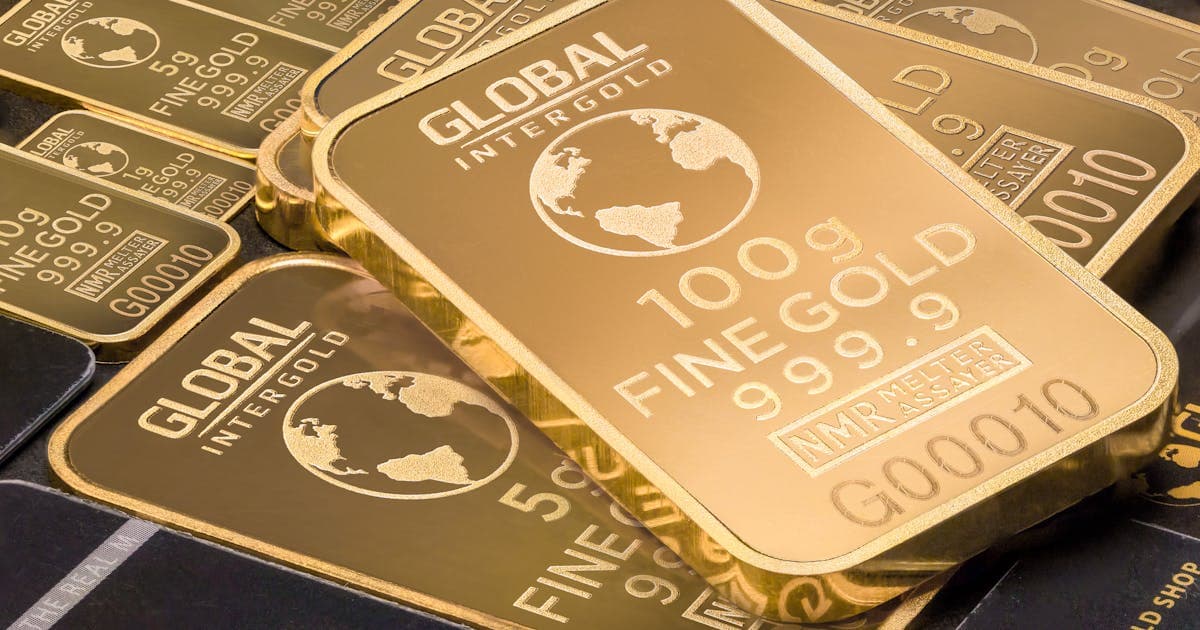
Gold hit a historic $5,500 per troy ounce in 2026. Brent crude moved from $71 to $112 — a 58% increase in a matter of months. The IMF published its April WEO under the subtitle "Global Economy in the Shadow of War." These are not coincidences: geopolitical risk is at the center of portfolio allocation decisions this year.
For investors, understanding how geopolitics affects markets is as important as knowing how to analyze a quarterly balance sheet. International conflicts and tensions shift commodity prices, capital flows, and the logic of diversification in ways that no isolated company analysis can capture.
The Facts: What Is Happening
The Middle East conflict — identified by the IMF as the primary risk factor for the global economy in 2026 — has two direct effects and one indirect:
Direct effect 1: Oil The Middle East escalation threatens oil transport routes and reduces production from regional countries. Brent moved from $71 to $112 in a matter of months. This raises energy costs worldwide, pressures inflation, and complicates the work of central banks.
Direct effect 2: Gold as a store of value Gold at $5,500 signals that institutional investors worldwide are paying a premium for protection. Central banks of emerging countries — particularly China and India — have been increasing gold reserves, reducing dependence on the dollar. This sustains structural demand for the metal.
Indirect effect: Capital flows In periods of high risk aversion, capital tends to leave risk assets (equities, emerging market currencies) and migrate to "safe havens" (dollar, U.S. Treasuries, gold). This creates currency pressure in emerging markets — unless they offer interest rate differential or perception of relative stability.
Brazil as a "Relative Safe Haven" in Emerging Markets
Here is a surprising data point: Brazil received R$ 67.4 billion in foreign investment year-to-date through April 2026. This positions Brazil as a capital destination amid global turbulence — a non-obvious result for those who follow the domestic debate about public debt and fiscal instability.
The explanation has several layers:
Real interest rate differential: with Selic at 14.75% and inflation around 7%, Brazil offers a real interest rate close to 7.5% per year. Foreign investors allocating to reais — with or without hedging — capture this differential.
Commodities as natural hedge: Brazil exports oil, soybeans, beef, iron ore, sugar, and pulp. In a scenario of commodity prices elevated by geopolitical conflict, Brazil's external sector strengthens and the exchange rate tends to find support.
Geographic diversification: for investors with concentrated exposure to Europe and Asia — the regions most affected by the conflict and disrupted logistics chains — Brazil represents real diversification, not just on paper.
Opportunities the Scenario Creates
Geopolitical risk does not only destroy value — it redistributes it. For those who know where to look, the current environment has created meaningful opportunities:
Brazilian small caps 33% below historical average
Valuation analysis shows that Brazilian small caps trade at 9.0x Price/Earnings multiple, against a historical average of 13.4x — a discount of approximately 33%. Smaller companies, more exposed to the domestic market, were heavily penalized by the high interest rate cycle. If the cutting cycle advances as projected, these companies may benefit disproportionately in the recovery.
Exporters with attractive valuations
Brazilian exporters (Vale, Suzano, JBS, BRF, Petrobras) trade at 9.5x Price/Earnings, against a historical average of 11.2x — a 16% discount. In a scenario of elevated commodity prices and depreciated currency, the margins of these companies are expanding. The depressed valuation suggests the market has not yet fully priced this combination.
Gold as a protection allocation
Gold allocation — via ETF (GOLD11, OGOLD11 on B3) or Tesouro Ouro — makes sense in the current context as protection against geopolitical tail risks. This is not speculation: it is part of a diversified portfolio that acknowledges that extreme events have non-zero probability.
Geographic Diversification: Why "Brazil + U.S." Is Not Enough
A portfolio with 70% Brazil and 30% U.S. may seem diversified, but it has high correlation during crises: when global risk appetite falls, both markets suffer simultaneously, the real depreciates, and the portfolio loses real value.
Effective geographic diversification includes exposure to:
- Commodities and resource markets: Canada, Australia — economies that benefit from elevated energy and metals prices
- Less conflict-exposed developed markets: Japan, Switzerland — with currencies historically considered havens
- Intra-emerging market diversification: India and Indonesia have different dynamics from Brazil and China
In the 2026 context, geographic diversification is not a luxury — it is risk management.
The Trap of Total "Flight to Safety"
A common mistake in turbulent periods is a complete migration to fixed income and low-risk assets. The problem: when risk diminishes (as in any peace or de-escalation cycle), risk assets recover quickly — and those who exited entirely miss the recovery.
The most robust approach is to maintain a diversified portfolio with deliberate allocation for each scenario:
| Scenario | Favored Assets |
|---|---|
| Conflict intensifies | Gold, oil, commodity exporters |
| De-escalation / peace | Growth equities, emerging markets, real |
| Persistent inflation | IPCA+ bonds, real assets, commodities |
| Global recession | Short fixed income, dollar, gold |
Thinking in Probabilities, Not Scenarios
The failure of geopolitical analysis in investing is often the temptation to pick a single scenario and position the entire portfolio accordingly. Most investors got the 2022 energy crisis "right" in direction but wrong in timing. Most got 2024 AI adoption "right" in thesis but wrong in entry point.
The robust portfolio thinking says: assign probability weights to scenarios, not certainty. At current pricing, the market is implying approximately:
- 40% probability: partial de-escalation, oil retreats toward $85, gold stabilizes
- 35% probability: status quo maintained, commodity prices remain elevated
- 25% probability: further escalation, oil above $130, gold above $6,000
Building a portfolio that performs acceptably across all three scenarios — rather than maximizing in one and catastrophically failing in another — is the practical application of geopolitical risk management.
The logic of a robust portfolio is that no single scenario is certain — and diversification is the response to that structural uncertainty.
Royal Binary is a collective investment platform. This content is educational and does not constitute investment advice. Consult a certified advisor before making financial decisions.