

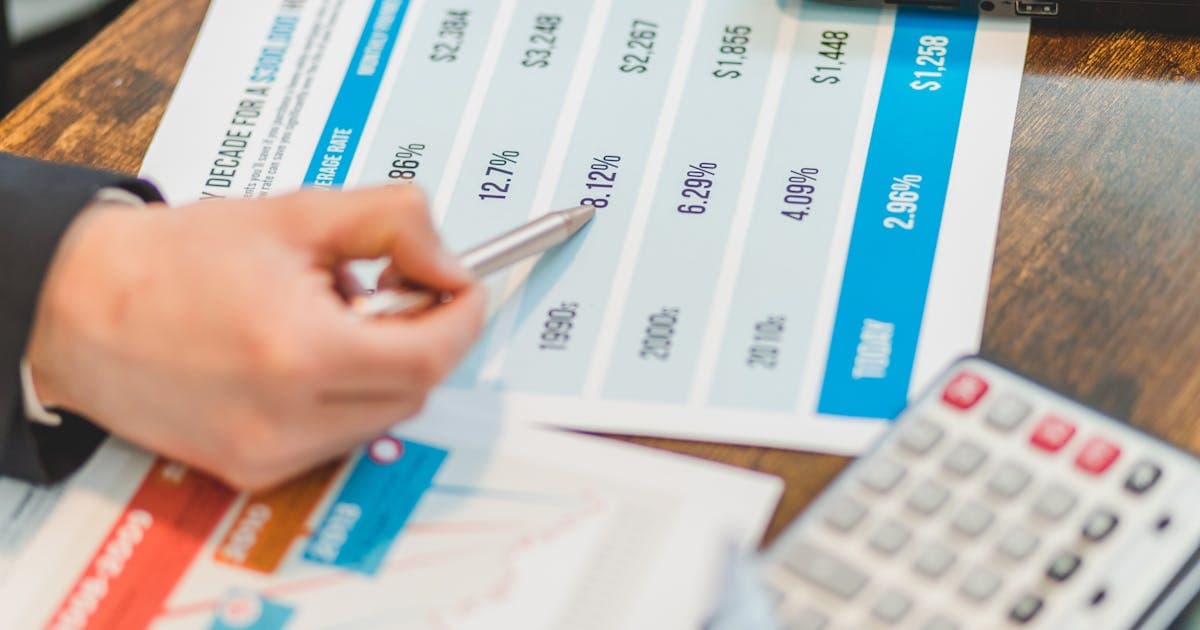
Brazil's Q1 2026 earnings season began with Romi (ROMI3) — the capital goods manufacturer was among the first companies listed on B3 to report first-quarter results. In the weeks that follow, larger companies including Gerdau, Vale, and then the major banks will report. Each of these reports includes financial statements: an income statement, a cash flow statement, and the balance sheet (balanço patrimonial).
For many investors — particularly those who entered the market during the 2020–2022 digital investing boom — reading a balance sheet remains an uncomfortable gap. This guide addresses that gap directly, using companies from Brazil's actual Q1 2026 earnings season as reference points.
What a balance sheet is and what it does
A balance sheet is a snapshot: it shows what a company owns (assets), what it owes (liabilities), and what belongs to shareholders after those obligations are settled (equity). It is taken at a specific date — the last day of the quarter or fiscal year.
The fundamental identity of accounting is:
Assets = Liabilities + Shareholders' Equity
This equation always holds. If a company borrows R$1 billion (an increase in liabilities), it simultaneously has R$1 billion more in cash or assets (an increase in assets). If a company generates R$500 million in net profit and retains it (rather than distributing as dividends), retained earnings (equity) rise by R$500 million, and assets rise by the same amount.
Understanding that this equation cannot be violated helps you verify that statements are complete and identify where management decisions show up.
The asset side: current and non-current
Assets are divided into current (circulating assets — those expected to be converted to cash within 12 months) and non-current (long-term assets).
Current assets typically include:
- Cash and cash equivalents (caixa e equivalentes)
- Short-term investments (aplicações financeiras)
- Accounts receivable (contas a receber) — money owed by customers
- Inventory (estoques) — for manufacturing and retail companies
- Prepaid expenses
Non-current assets include:
- Property, plant, and equipment (imobilizado) — factories, machinery, buildings
- Intangible assets (intangíveis) — patents, brand value, goodwill from acquisitions
- Long-term investments and subsidiaries
- Deferred taxes
For an industrials company like Romi — which manufactures machine tools — the imobilizado (physical plant and machinery) is a large and critical asset. For Vale — a mining company — the mineral rights and mine infrastructure are massive non-current assets.
The liability side: short-term and long-term debt
Current liabilities include obligations due within 12 months:
- Accounts payable (fornecedores) — money owed to suppliers
- Short-term debt and current portion of long-term debt
- Taxes payable
- Deferred revenue
Non-current liabilities include:
- Long-term debt (dívida de longo prazo) — bonds, bank loans due beyond 12 months
- Deferred tax liabilities
- Provisions for contingencies (legal claims, environmental liabilities)
For mining companies like Vale, provisions for environmental and legal contingencies can be substantial — both Vale and Gerdau carry significant provisions related to environmental events and litigation.
Shareholders' equity: the residual claim
Equity (patrimônio líquido) is what remains after subtracting all liabilities from total assets. It comprises:
- Paid-in capital (capital social) — what shareholders originally invested
- Retained earnings (lucros acumulados) — profits generated and not distributed as dividends
- Other comprehensive income — unrealized gains/losses on certain investments and foreign currency
For companies that have been profitable and disciplined with dividends, retained earnings grow steadily over years, building a large equity base. For companies that have taken large write-offs, restructuring charges, or losses, retained earnings may be negative — meaning the company has consumed more capital than it has generated.
The key ratios
Ratios extract relationships from balance sheet data that raw numbers obscure:
Price-to-Book (P/B): Market capitalization divided by shareholders' equity. A P/B of 1.0x means the market values the company at exactly what the accounting says its equity is worth. A P/B below 1.0x means the market believes the assets are overstated or that future returns will not cover the cost of capital. Brazilian small caps in 2026 trade at very low P/B ratios — Gerdau, for example, has historically traded between 0.8x and 2.5x P/B.
Debt-to-Equity (D/E): Total debt divided by shareholders' equity. High D/E ratios indicate financial leverage — the company has borrowed significantly relative to its equity base. This amplifies returns when business is good and amplifies losses when conditions deteriorate. Vale's D/E is significantly lower than Gerdau's because Vale generates more free cash flow relative to its capital base.
Return on Equity (ROE): Net income divided by average shareholders' equity. This measures how efficiently management uses the equity capital it has. A bank generating 15% ROE is considered good by Brazilian banking standards; an industrial company generating 8% ROE may be acceptable depending on the capital intensity of the business.
Current Ratio: Current assets divided by current liabilities. A ratio above 1.0x means the company has more liquid assets than short-term obligations — it can meet its near-term commitments. A ratio below 1.0x raises liquidity concerns, particularly if short-term debt renewal is uncertain.
| Ratio | Formula | What It Shows | Gerdau (approx.) | Vale (approx.) |
|---|---|---|---|---|
| P/B | Market cap ÷ equity | Valuation vs. book | ~1.2x | ~1.5x |
| D/E | Total debt ÷ equity | Leverage | Higher | Lower |
| ROE | Net income ÷ avg equity | Return on capital | ~15–18% | ~20%+ |
| Current ratio | Current assets ÷ current liabilities | Liquidity | >1.0x | >1.0x |
Red flags to look for
Accounts receivable growing faster than revenue: If receivables are rising faster than sales, it can indicate that customers are paying more slowly (a sign of customer financial stress) or that revenue is being recognized before it is truly earned.
Goodwill that is never impaired: When a company acquires another for more than its book value, the excess is recorded as goodwill. If goodwill is never written down despite the acquired business underperforming, the balance sheet may be overstating asset values.
Rising inventories in a softening demand environment: For manufacturers (like Romi), inventory building during periods of weak demand can indicate that production has not yet adjusted to lower order books.
Negative equity: This means liabilities exceed assets. For most companies, negative equity is a serious sign of financial distress. For some holding structures, it can be explained by large dividend distributions — but it requires explanation.
Contingency provisions that are opaque: Large legal and environmental contingencies without clear disclosure of their basis make it difficult to assess actual liability.
Where to find Brazilian financial statements
All Brazilian publicly traded companies must file their financial statements with the CVM (Comissão de Valores Mobiliários) through the EDGAR-equivalent system, EDGAR Brasil. Statements are also available on company investor relations (RI) pages and on B3's website under each company's filing section.
For Vale and Gerdau, English-language versions of quarterly earnings releases (earnings releases, not full IFRS filings) are available on their IR pages, given their significant international investor base. For smaller companies like Romi, Portuguese-language filings on the CVM system are the primary source.
The ability to locate, open, and read these documents is the difference between owning a company and owning a ticker symbol.
At Royal Binary, our analysis draws on fundamental financial data alongside technical and macro inputs. If you'd like to see how we integrate this type of analysis into real-time trading decisions, explore our platform.