

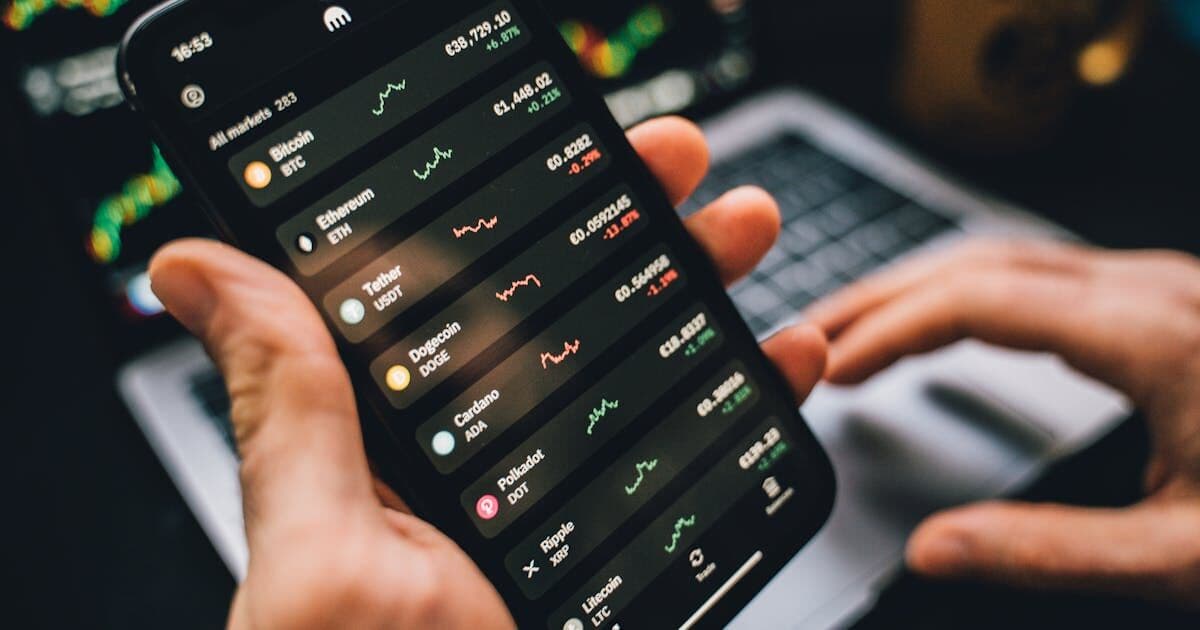
Something notable is happening in Indonesian coffee shops, university campuses, and co-working spaces. Young Indonesians — many of them first-time earners — are opening investment accounts on their phones, asking questions about saham (stocks) on TikTok, and discussing reksadana (mutual funds) with the same energy previous generations reserved for property or gold.
The data supports what anyone observing Indonesian youth can see firsthand. Indonesia's retail investor base grew from roughly 3.8 million accounts in 2020 to over 13 million registered securities accounts by the end of 2025 — a number that would have been unthinkable just five years ago. The majority of new accounts belong to investors under 40, with millennials and Gen Z now making up more than 60% of registered securities investors on the IDX (Indonesia Stock Exchange).
This is not a coincidence. It reflects a convergence of improving market access, fintech democratization, growing financial literacy, and an economy that — despite global headwinds — continues to expand at a rate most developed nations would envy.
The Royal Binary team examines what the Indonesian investment landscape looks like in 2026, what tools are available to beginners (cara investasi 2026 is one of the most searched financial terms in the country), and how to approach building a first portfolio responsibly.
The Indonesian Market in 2026
Indonesia's macroeconomic backdrop is one of relative resilience. The IMF and domestic forecasters project GDP growth of 4.9% to 5.0% for 2026, making Indonesia one of the faster-growing large economies in the world. The country's 270 million population, median age of approximately 29, and rapidly expanding middle class represent what economists call a "demographic dividend": a large and growing workforce generating income, spending, and — increasingly — saving.
The IHSG (Indeks Harga Saham Gabungan, or Jakarta Composite Index) has been recovering after a period of volatility driven by global trade tensions, dollar strength, and commodity price swings. Bank Indonesia has been actively managing monetary policy, adjusting benchmark rates in response to inflation dynamics and rupiah stability. The Indonesian rupiah remains sensitive to external shocks — particularly moves by the US Federal Reserve and swings in global risk appetite — a reality every investor in the country should understand from the outset.
Domestic consumption remains the primary driver of Indonesian economic growth, and companies in consumer goods, banking, telecommunications, and digital services have benefited accordingly. For investors willing to take a long view on saham Indonesia 2026, the structural story — urbanization, rising incomes, digital economy expansion — remains intact.
The regulatory framework is also maturing. OJK (Otoritas Jasa Keuangan), Indonesia's financial services authority, has been actively expanding oversight of digital investment platforms, requiring stricter licensing, clearer risk disclosures, and stronger investor protection standards. This is broadly positive for retail investors: the era of unregulated investment products operating in grey zones is narrowing.
Investment Options Available in Indonesia
Understanding the available vehicles is the starting point for any investor. Indonesia offers a range of regulated options suited to different risk tolerances and time horizons.
Saham (stocks via IDX). The Indonesia Stock Exchange lists over 900 companies. Retail investors can access equities through licensed securities companies and regulated broker-dealer apps. The IDX has actively promoted retail participation through its Yuk Nabung Saham (Let's Save in Stocks) campaign, which encourages regular, small-amount investing.
Reksadana (mutual funds). This is among the most accessible entry points for beginners investing modal kecil (small capital). Managed by licensed investment managers, reksadana allows investors to pool funds into professionally managed portfolios covering equities, bonds, money markets, or mixed assets. Many platforms allow minimum investments of Rp 10,000.
SBN (Surat Berharga Negara, government bonds). Indonesia's Ministry of Finance sells retail government bonds directly to citizens through designated distribution partners. Instruments like ORI (Obligasi Negara Ritel) and SR (Sukuk Ritel) offer fixed returns backed by the government, typically with minimums of Rp 1,000,000. These are among the lowest-risk instruments in the domestic market.
Kripto (cryptocurrency). Indonesia has one of the most active cryptocurrency markets in Southeast Asia. The country is among the top global markets by retail crypto participation, and platforms like Indodax, Pintu, and Tokocrypto operate under Bappebti (now consolidated under OJK) licensing. Volatility is substantially higher than other asset classes, and this distinction requires clear understanding before allocating capital.
Trading terkelola / managed trading. A growing category in the Indonesian market is managed or automated trading — trading otomatis — where professional operators manage invested capital on behalf of clients. This model removes the need for investors to understand technical analysis or monitor markets daily, making it relevant for working professionals and students with limited time.
Starting with Small Amounts (Investasi Modal Kecil)
One of the most significant shifts in Indonesian retail investing is the collapse of the minimum investment barrier. Investasi pemula Indonesia no longer requires large capital.
Consider what is possible today at entry-level amounts:
- Rp 10,000: Reksadana pasar uang (money market mutual funds) on Bibit, Ajaib, or Bareksa
- Rp 100,000: Equity reksadana or index funds through multiple regulated platforms
- Rp 1,000,000: Direct government bonds (SBN) through Ministry of Finance distribution windows
- ~Rp 190,000 (approximately $12): Managed trading plans on international platforms such as Royal Binary
The principle behind small-amount investing is not merely about accessibility. It is about behavior. Starting with Rp 100,000 a month builds the habit — the automatic deduction, the regular check-in, the tolerance for short-term volatility — that scales effectively as income grows. The investor who contributes Rp 200,000 monthly from age 22 will outperform the one who waits for Rp 5,000,000 to invest at age 30, because time and compounding work against delay.
Info
Cara investasi 2026 does not require large capital. The platforms now available to Indonesian investors make consistent small contributions more powerful than occasional large ones. Starting with Rp 100,000 a month matters more than waiting for the "right" amount.
Understanding Managed Trading
Managed trading (trading terkelola or trading otomatis) is a model in which investors allocate capital to a professional trading team or algorithm that operates in financial markets on their behalf. The investor does not need to execute trades, analyze charts, or monitor positions. The operator handles all of that.
Royal Binary operates on this model. Here is how it works in practice:
Investors fund a plan with a defined minimum — the entry-level plan starts at $12 (approximately Rp 190,000 at current exchange rates). A professional trading team then operates in the financial markets using that capital. Profits generated are shared between the investor and the trading team on a 50/50 split. The trading team only earns when the investor earns — a structural alignment of interests.
For Indonesian investors who find themselves drawn to the market but intimidated by technical analysis, or who lack the time to trade actively, managed trading offers a participatory model that does not require ongoing active management.
For context on the Indonesian preference for automation: searches for "trading otomatis" and "copy trading" in Indonesia have grown substantially over the past two years, reflecting a population that wants market participation without the learning curve of active trading.
Tip
Managed trading is not passive income in the traditional sense — it involves real capital at risk, and returns are not guaranteed. Understanding what the operator does with your capital, their risk management approach, and their track record is part of due diligence before allocating any amount.
The Role of Fintech Platforms
Indonesian fintech has transformed investasi pemula Indonesia over the past four years. Platforms like Bibit, Ajaib, Stockbit, and Bareksa have brought licensed investment products to millions of users who previously had no access to regulated financial markets.
Bibit focuses on reksadana with a robo-advisor layer that recommends allocation based on risk profile and goals. It is widely regarded as one of the most beginner-friendly entry points for Indonesian retail investors.
Ajaib offers both reksadana and stock trading in a single app, allowing investors to progress from funds to direct equities as their knowledge grows.
Stockbit is oriented toward more active equity investors, with a social component that allows users to follow portfolios, share analysis, and engage with a community of other Indonesian investors.
Tokopedia (through its Tokopedia Investasi feature integrated via Gotrade and GoInvestasi) brings investment access to a platform with hundreds of millions of existing users, reducing the activation energy for first-time investors.
These platforms are OJK-regulated and represent legitimate entry points for saham Indonesia 2026 or reksadana investing.
How does managed trading differ from these platforms? Domestic fintech platforms give investors access to instruments they manage themselves — even if the interface is simplified. Managed trading removes the management entirely: the investor allocates capital, and a team of professionals executes strategy. For some investors, this is preferable; for others, maintaining control and building knowledge through active management is the goal. Both models have their place depending on investor preference, time availability, and confidence level.
Risks Every Beginner Should Understand
Honest risk disclosure is not a formality — it is foundational to responsible investing. The Royal Binary team considers this non-negotiable.
Market risk. Any investment in equities, mutual funds, or derivatives involves the possibility of loss. The IHSG can and does decline. Reksadana values fall when underlying assets fall. Past performance — whether of a fund, a managed trading service, or an index — does not guarantee future results.
Currency risk. The Indonesian rupiah has historically been vulnerable to periods of dollar strength, capital outflows from emerging markets, and commodity price cycles. For investments denominated in foreign currencies (including international managed trading platforms), rupiah depreciation can increase effective returns in rupiah terms, but appreciation can reduce them. This works in both directions.
Liquidity risk. Some instruments — particularly government bonds held to maturity, time deposits, or certain reksadana with redemption windows — limit how quickly you can access your capital. Investing money you may need in the near term into illiquid instruments is a common beginner mistake.
Platform risk. Not all platforms operating in Indonesia are OJK-licensed. Some investment products marketed through social media, messaging apps, or unregulated channels are not supervised by any authority. The OJK maintains a public list of licensed entities and regularly issues warnings about unauthorized platforms. Checking this list before investing through any platform is essential practice.
Volatility tolerance. Crypto assets, in particular, experience swings of 30%–50% in short periods. An investor who cannot tolerate seeing their portfolio decline 40% should not allocate a large proportion of capital to crypto, regardless of the potential for gains.
Warning
Investasi pemula Indonesia: before allocating any capital, verify that the platform is listed on the OJK's official registry at ojk.go.id. The presence of a professional-looking website, social media presence, or testimonials does not confirm regulatory status. Verify independently.
Building Your First Investment Strategy
A first investment strategy does not need to be complex. Complexity in early-stage investing often signals confusion, not sophistication. The following framework is designed for Indonesian investors starting from zero or close to it.
Step 1: Secure your emergency fund first. Before any investment, maintain three to six months of essential expenses in a liquid account at a regulated bank. In Indonesian banking, deposits up to Rp 2 billion are covered by LPS (Lembaga Penjamin Simpanan), the deposit insurance program. This fund is not an investment — it is insurance. Do not invest it.
Step 2: Define your time horizon. A 25-year-old saving for retirement in 35 years can afford equity volatility. A 27-year-old saving for a house down payment in two years cannot. Time horizon determines which instruments are appropriate.
Step 3: Start with one regulated platform. Beginners benefit from simplicity. Open one account on Bibit or Ajaib, choose a reksadana appropriate to your risk profile, and set up automatic monthly contributions. Master one platform before diversifying across several.
Step 4: Add complexity gradually. Once you understand how reksadana works — how NAB (Nilai Aktiva Bersih, or NAV) moves, how to read a fund factsheet, what an expense ratio is — you can consider adding individual equities, government bonds, or alternative options like managed trading.
Step 5: Review quarterly, not daily. One of the most damaging behaviors for beginning investors is over-monitoring. Checking portfolio value daily encourages emotional decision-making. A quarterly review — assessing whether your allocation still matches your goals and adjusting contributions if income has changed — is sufficient for most long-term investors.
Step 6: Increase contributions as income grows. A useful heuristic: when income increases, allocate at least 50% of the increase to investments. You were living on your previous income, so lifestyle inflation on the full amount is not necessary.
The Indonesian investment landscape in 2026 is genuinely better than it has been at any prior point. Regulatory improvement, fintech democratization, lower minimums, and growing financial literacy have created conditions where a young Indonesian with Rp 100,000 and a phone can build a legitimate, diversified investment portfolio. That access is meaningful. Using it consistently, with clear understanding of risks and instruments, is how it becomes consequential.
Explore Royal Binary's managed trading plans — including the entry-level plan starting at $12 (approximately Rp 190,000) — at app.royalbinary.io.