

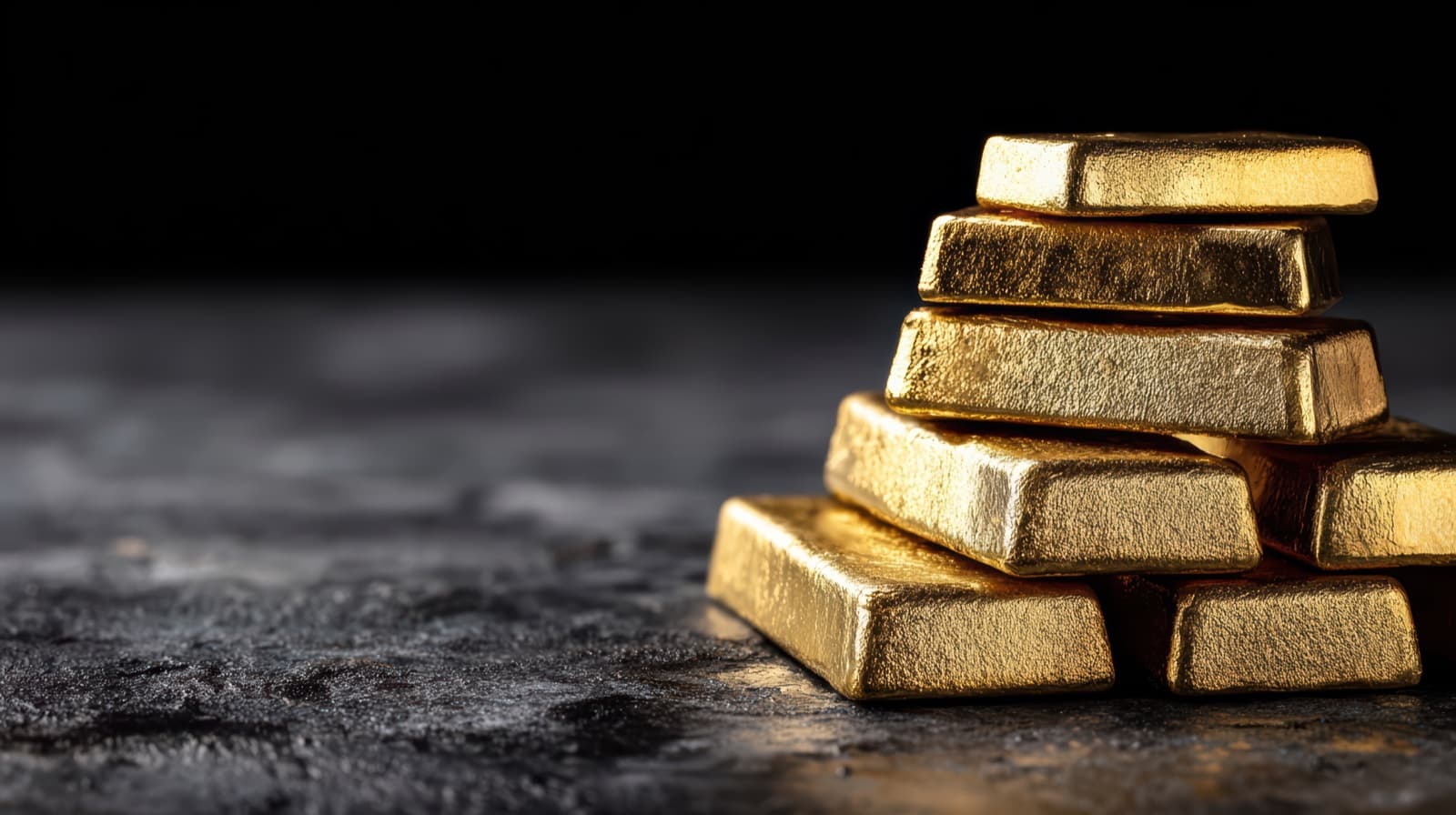
Gold started 2025 at $2,624 per ounce. By October, it had blown past $4,000. On January 28, 2026, it touched $5,589.38 — the highest price ever recorded. In a single year, gold returned over 60%, roughly four times the S&P 500 and more than quadruple Bitcoin's performance.
That is not a fluke. It is the result of structural forces that are unlikely to reverse anytime soon: persistent inflation, geopolitical fracturing, central bank accumulation, and a growing distrust of fiat currencies across emerging markets.
The question is no longer whether gold matters. It is how to access it — and whether now is the right time.
Why gold is surging
Gold does not generate earnings, pay dividends, or produce cash flow. It sits there. That is precisely why it works as a hedge: its value comes from what it is not. It is not a liability on anyone's balance sheet. It is not tied to corporate performance. It cannot be printed by a central bank.
Central bank buying
Central banks purchased over 1,100 tonnes of gold in 2025, extending a multi-year accumulation trend. Developing economies, in particular, are increasing their gold reserves to reduce dependence on the US dollar. The relatively low share of gold in emerging market reserve portfolios suggests this buying will continue through 2026 and beyond.
Inflation and real interest rates
Even as headline inflation has moderated, real interest rates remain compressed in many economies. When bonds yield less than inflation, gold becomes more attractive because the "opportunity cost" of holding a non-yielding asset shrinks. Rate-cutting cycles in Brazil, Europe, and parts of Asia have reinforced this dynamic.
Geopolitical fragmentation
Trade wars, sanctions regimes, and regional conflicts have accelerated the search for neutral stores of value. Gold has no counterparty risk. In a world where financial infrastructure is increasingly weaponized, that property matters more than ever.
Info
Over the past five years, gold's annualized return of approximately 18% has outpaced US equities, bonds, and broad commodities. Gold also maintains near-zero correlation with the S&P 500, meaning it tends to rise when other assets fall during market stress.
Why gold matters in Latin America
The gold rally has a specific resonance in emerging markets. In Brazil, searches for "ouro investimento" have surged over 50%. In Colombia, "inversiones en oro" has hit breakout levels on Google Trends.
The reasons are straightforward:
Currency devaluation. The Brazilian real, Colombian peso, Argentine peso, and Mexican peso have all experienced significant volatility against the dollar over the past two years. For investors earning and saving in these currencies, gold priced in dollars acts as a hedge against local purchasing power erosion. When the real weakens, gold priced in reais climbs even faster than gold priced in dollars.
Inflation persistence. While central banks across the region have started cutting rates — Brazil is expected to ease by nearly 250 basis points in 2026 — inflation remains above target in several economies. Gold has historically outperformed during rate-cutting cycles because it benefits from lower real yields without the credit risk of bonds.
Institutional distrust. In economies with histories of currency confiscation, bank freezes, and hyperinflation, gold represents something no government policy can dilute. This is cultural as much as financial.
How to invest in gold
Gold is no longer a single asset class. There are now multiple ways to gain exposure, each with different trade-offs in cost, liquidity, custody, and risk.
Physical gold
Bars, coins, and jewelry remain the most intuitive form of gold ownership. You hold the metal directly, with no counterparty risk. But physical gold comes with storage costs, insurance requirements, and significant spreads between buy and sell prices. Liquidity can be limited, especially for larger positions. Authentication is another concern: counterfeit bars have become increasingly sophisticated.
Physical gold makes sense for long-term holders who want insurance outside the financial system. It is less practical for active investors or those seeking precise market exposure.
Gold ETFs
Exchange-traded funds are the most accessible way to invest in gold today. Physically-backed ETFs hold actual gold in vaults and track the spot price:
- SPDR Gold Shares (GLD): The largest gold ETF globally, with over $176 billion in assets and a 0.40% expense ratio
- iShares Gold Trust (IAU): Lower cost at 0.25%, with over $80 billion in assets
- VanEck Merk Gold Trust (OUNZ): Unique in allowing investors to redeem shares for physical gold
For Brazilian investors, the B3 offers several options without needing a foreign brokerage:
- GOLD11: Tracks the LBMA Gold Price index
- BIAU39: BDR of iShares Gold Trust, also tracking the LBMA Gold Price
- GOLB11: The first gold futures ETF on B3, combining gold futures with Treasury LFTs — offering gold exposure with a CDI yield component
- GLDX11: Replicates the VanEck Merk Gold Trust (OUNZ)
- GDXB39: Tracks the NYSE Arca Gold Miners index for exposure to mining companies
Tip
ETFs are the most cost-effective entry point for most investors. They eliminate storage and insurance costs, provide daily liquidity, and can be bought in fractional amounts. For Brazilian investors, GOLD11 and BIAU39 offer direct gold exposure without currency conversion friction.
Gold futures
Futures contracts allow leveraged exposure to gold price movements. A small margin deposit controls a much larger notional position, amplifying both gains and losses. Futures are standardized contracts traded on regulated exchanges like COMEX.
Futures are tools for professional traders and hedgers, not for buy-and-hold investors. They require active management, margin monitoring, and an understanding of contango and backwardation. Most retail investors are better served by ETFs.
Digital gold and tokenized gold
A newer category bridges traditional gold with blockchain technology:
- PAX Gold (PAXG): Each token is backed by one fine troy ounce of gold stored in Brink's vaults. Regulated by the New York State Department of Financial Services. Redeemable for physical gold.
- Tether Gold (XAUT): Similar structure, backed by gold stored in Switzerland. Each token represents one troy ounce.
Tokenized gold provides 24/7 trading, fractional ownership (you can own 0.01 of an ounce), and global transferability without intermediaries. The trade-off is that you are adding smart contract risk and exchange risk to what is fundamentally a safe-haven asset.
Gold mining stocks
Rather than owning the metal, you can own companies that extract it. Mining stocks (and ETFs like GDX) offer leveraged exposure to gold prices because miners' profit margins expand disproportionately when gold rises. But they also carry operational risk, management risk, and equity market correlation that pure gold does not.
Gold's limitations
No honest analysis of gold can ignore its weaknesses:
No yield. Gold generates no income. In a portfolio, it relies entirely on price appreciation. During extended periods of rising real interest rates, gold can underperform significantly.
Volatility. Despite its "safe haven" reputation, gold can be volatile. The move from $2,624 to $5,589 in just over a year was dramatic, but so are the corrections. Investors who entered at the January 2026 high experienced sharp drawdowns in February. The long-term trend is up, but the path is not smooth.
Storage and cost friction. Physical gold requires vaults, insurance, and verification. ETFs charge expense ratios. Futures have margin costs. Tokenized gold has blockchain fees. None of these are free.
No compounding. Unlike dividends that can be reinvested or businesses that retain earnings to grow, gold is inert. Over very long periods, equities have historically outperformed gold precisely because of compounding.
Info
Gold is a portfolio tool, not a portfolio. Most financial advisors suggest allocating 5% to 15% of a diversified portfolio to gold, depending on risk tolerance and macro outlook. It protects against specific risks but does not replace growth assets.
Gold vs. other assets in 2025-2026
The numbers are striking:
| Asset | 2025 Return |
|---|---|
| Gold | +62% |
| NASDAQ | +18.3% |
| Bitcoin | +15.6% |
| S&P 500 | +13.3% |
| US Bonds | ~7% |
Gold's outperformance was driven by a unique confluence of factors that may not repeat at the same magnitude. But the structural drivers — central bank buying, geopolitical risk, and inflation hedging — remain intact.
What the comparison also reveals: gold and equities serve different functions. Gold protects purchasing power during instability. Equities generate long-term wealth through earnings growth. The most resilient portfolios hold both.
Where gold fits in a broader strategy
Gold works best as insurance, not speculation. It is the asset you hold hoping you never need it — but that saves you when credit markets freeze, currencies collapse, or geopolitical shocks hit.
For Latin American investors in particular, gold addresses a real and recurring problem: currency instability. Whether you are in Brazil watching the real fluctuate, in Colombia navigating peso volatility, or in Argentina dealing with capital controls, gold denominated in dollars (or held physically) provides a layer of protection that local bonds and equities cannot.
At Royal Binary, we approach wealth building through managed trading — a different but complementary philosophy. Our team trades across multiple asset classes, including commodities, with a 50/50 profit-sharing model that aligns our interests with our investors'. Gold is one part of the diversification puzzle. Active management is another.
The investors who will navigate 2026 best are those who understand that no single asset, strategy, or manager holds all the answers. Gold has earned its place in that conversation. The key is knowing how much to hold, in what form, and alongside what else.