

On Thursday, April 17, 2026, Iran's Foreign Minister Abbas Araghchi made an announcement markets had been waiting weeks to hear: the Strait of Hormuz was "completely open." The statement formally cemented the ceasefire struck on April 8, but this time something was different — the planet's most critical supply route was back to unrestricted operations.
The reaction was immediate and violent. Brent crude for June delivery closed at $86.84, a drop of roughly 10% in a single session, according to CNBC and Bloomberg data. WTI for May retreated to $79.78, down about 12%. On Wall Street, the S&P 500 and Nasdaq printed new all-time highs in the same session, per CNN Business. In fewer than ten trading hours, the market erased months of embedded geopolitical risk premium.
I've been trading since 2019, and in six years in the market I've rarely witnessed risk premium compress this fast. It's uncommon for a single diplomatic statement to simultaneously move crude oil, equities, and global inflation expectations at this magnitude. Understanding the chain of events connecting these moves is essential for knowing what, in practice, changes for investors.
The Chain: Ceasefire → Reopening → Risk Premium Collapse
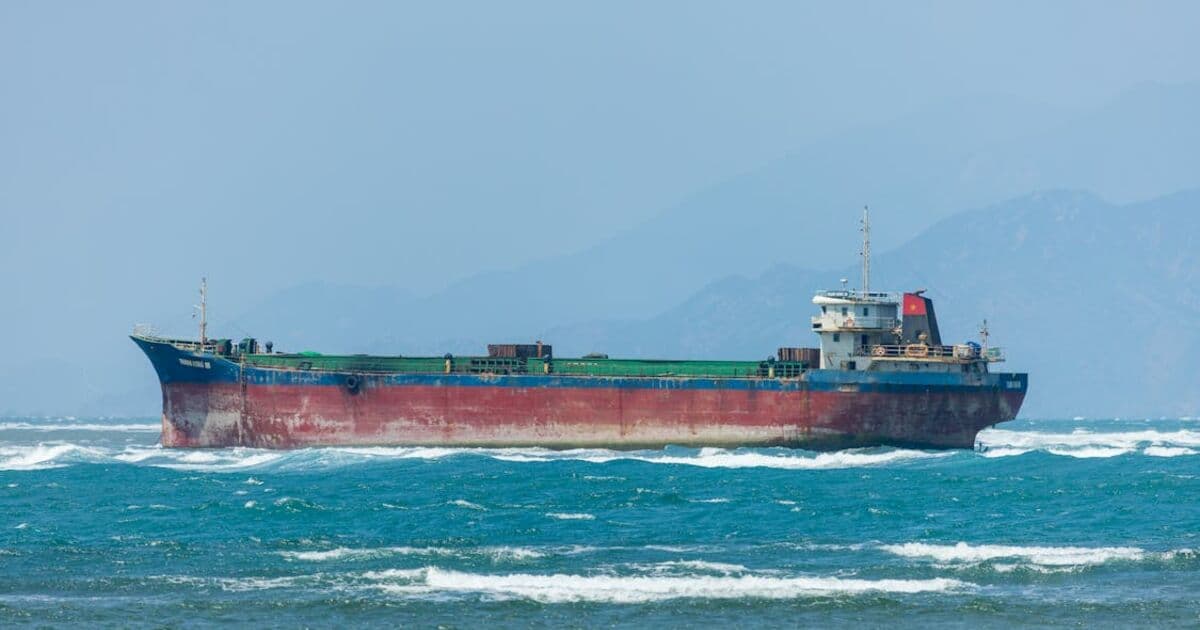
The conflict that began in February 2026 progressively blocked traffic through the Strait of Hormuz — the passage between the Persian Gulf and the Arabian Sea through which roughly 20% of the world's consumed oil transits. At the height of the crisis, the number of vessels crossing the strait per day had plunged from 138 to just 12, according to Kpler. The direct impact on barrel prices was stark: Brent traded above $112 during the most tense weeks.
The April 8 ceasefire halted the attacks but did not normalize maritime traffic. The risk premium shrank but didn't disappear — which is why Brent was still above $94 through April 16. Iran's foreign minister's April 17 statement was the missing signal: the route was open, ships could transit freely, and the $20–25 premium embedded in the barrel no longer had immediate justification.
When the oil market concludes that a risk premium has no more support, it removes it fast. That is exactly what happened.
Oil at $86: Where We Stand in the Cycle
To understand whether $86 per barrel is "cheap" or "fair," a reference point helps. On February 27, 2026, before the conflict escalated, Brent was trading around $70–71. So even after the 10% drop on April 17, the barrel still carries a premium of roughly $16 above pre-war levels.
That gap exists for a concrete reason: reopening a maritime route doesn't mean global inventories are instantly replenished, that refineries that adjusted their logistics immediately reverted to prior rhythms, or that regional geopolitical uncertainty vanished. The energy market is cyclical, and the full normalization of a route like the Strait of Hormuz takes weeks or months.
The most likely scenario, in my reading, is a gradual compression of the remaining premium over the coming weeks, conditional on the ceasefire holding. If the agreement holds, Brent has room to retreat toward the $70–75 range. If any breakdown occurs, the premium returns quickly.
Oil is a cyclical asset. Past results do not guarantee future results, and commodity positions carry structural volatility that must be factored into portfolio management.
What Changes for Petrobras
Petrobras is the most direct link between the oil price and the Brazilian investor. With shares that historically show high positive correlation to Brent, a 10% drop in a single day creates real pressure on the stock price.
But there's a layer that goes beyond the share price: dividends. The company operates under a payout policy tied to cash flow, and the Brent level is a central variable in that calculation. With the barrel above $80, the company's cash generation remains robust. Petrobras's dividend yield was near 8% annually before this week's move — a level that remains competitive within Brazilian equities, even accounting for a potential compression driven by the oil decline.
The relevant question is not whether the share price will fall in the short term — it may. The question is whether the company's business model sustains the current payout level at $86 per barrel. And the answer, given Petrobras's cost structure and pricing model, is yes: the company's operational breakeven is well below that level.
This is not a buy or sell recommendation. Equities involve risk of capital loss, and Petrobras carries additional variables beyond oil — currency, distribution policy, regulatory risk, and political noise. Investors must assess their own risk profile and time horizon before any decision.
Global Equities and the Relief Rally
The behavior of the S&P 500 and Nasdaq on April 17 is not accidental. When oil falls sharply for a structural reason — not due to demand collapse, but due to supply normalization — equity markets tend to respond positively through two distinct channels.
The first is direct: lower energy costs improve margins for industrial, transportation, retail, and technology companies. The second is indirect: cheaper oil eases inflation expectations, which reduces pressure on central banks to maintain restrictive interest rates for longer. Less inflationary pressure means expectations of more favorable monetary policy, which increases the present value of future cash flows — and therefore raises equity prices.
This combination is what drove both the S&P 500 and Nasdaq to all-time highs in the same session crude collapsed. The market was waiting for a catalyst to unlock the geopolitical risk that had been building.
Brazil in the Global Context
Ibovespa had already anticipated part of the move. On April 10 — three days after the ceasefire announcement — the index reached 197,323 points, according to Vale Mais Notícia data. The Brazilian market quickly priced in the de-escalation scenario, but the confirmation of the Strait of Hormuz reopening on April 17 added a new element to the equation.
For Brazilian investors, cheaper oil acts in opposing directions depending on the asset. For companies that export energy commodities, it's a headwind. For consumers and energy-dependent companies, it's a tailwind. For domestic inflation — and consequently for Copom's policy — it's a relief.
The Selic rate stands at 14.75% per year. The Central Bank's Focus report projects 12.5% by year-end 2026. Any vector that reduces global inflationary pressure — such as the oil drop — reinforces the rate-cutting trajectory. This has a direct implication for Brazilian equities: lower rates raise the relative appeal of stocks over fixed income.
It's not a mechanical relationship — other factors are in play, including currency, domestic fiscal risk, and economic growth. But the directional vector is positive for the Brazilian equity market over the medium-term horizon.
Global Inflation: The Impact of a Cheaper Barrel
Oil is an input that permeates the entire global production chain. When Brent falls from $96 to $86 in a week, the disinflationary effect is not immediate — but it is real.
The most visible channel is consumer fuel prices. The less visible but equally important channel is transportation and logistics costs, which flow into the final price of nearly every manufactured good. A sustained oil decline eases pressure on the producer price index (PPI) in both developed and emerging economies, which eventually transmits to the consumer price index (CPI).
For the Fed, this creates room for a less restrictive posture without sacrificing anti-inflation credibility. For Copom, the impact is indirect — via currency and global inflation expectations — but points in the same direction: less pressure to keep rates elevated for longer.
Oil alone solves no structural inflation problem. But the normalization of supply through the Strait of Hormuz removes one of the exogenous factors that had been making the global disinflation path more tortuous since early 2026.
What Investors Should Monitor Now
The April 17 statement marks an inflection point, but not the end of the process. Several vectors warrant attention:
Ceasefire sustainability. The April 8 agreement was struck for two weeks. Any sign of breakdown could reignite the oil risk premium rapidly. Tracking the diplomatic situation between the U.S. and Iran remains relevant in the coming weeks.
Global inventory replenishment. The reopening of the Strait of Hormuz does not mean global oil inventories return to pre-crisis levels overnight. The pace of that replenishment will determine how far Brent can retreat.
Brazilian currency behavior. A weaker dollar in a lower-oil context may or may not materialize — it depends on global risk appetite. The real tends to benefit from a lower-risk-aversion environment, but domestic fiscal dynamics remain an independent factor.
Foreign flows into B3. Geopolitical normalizations typically increase appetite for emerging markets. Brazil, with an Ibovespa that has already demonstrated resilience and a Selic on a downward trajectory, is a natural candidate to attract a share of those flows.
Royal Binary offers managed investment plans with professional management. Create your free account at royalbinary.io and explore the options available for your profile.