

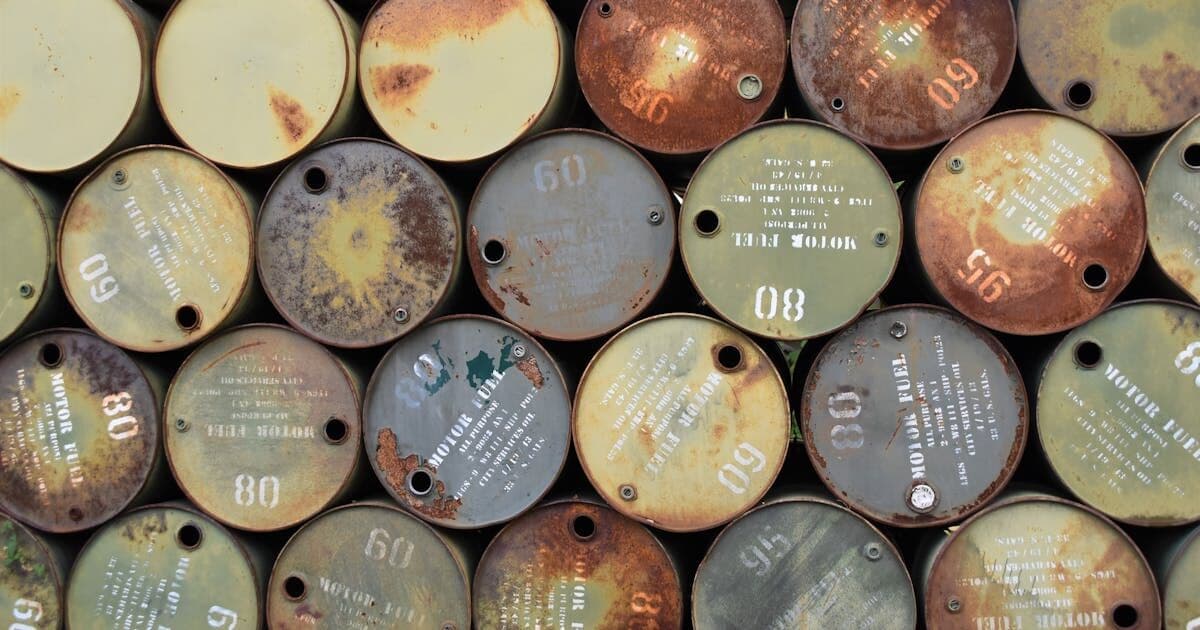
On April 8, 2026, the United States and Iran announced a two-week ceasefire mediated by Pakistan. Markets reacted immediately: oil fell 13% in a single day, the largest one-day drop since April 2020. Brent crude dropped from $112 to $94.80, and WTI settled around $95.75.
Eight days later, the picture is more complicated than that initial move suggested. The war is technically paused, but the Strait of Hormuz is still not functioning normally. The US and Iran are in discussions about extending the ceasefire. And investors — particularly those with exposure to Brazilian equities or energy — are caught in the middle, watching the Ibovespa set records while Petrobras slides.
This article is a direct update to the two-scenario analysis published on April 5. The goal is to answer three questions: what changed, what is still open, and what to watch next.
What changed since April 8
Oil: the drop happened, but pre-war levels are far away
Brent fell from $112 to the $94–96 range between April 8 and April 16. For context: before the war began on February 27, Brent was trading around $70–71. Even after the 13% decline, oil still carries a significant risk premium of roughly $24 above pre-conflict levels.
The reason is straightforward: the ceasefire suspended military attacks, but it has not reopened the Strait of Hormuz. Before the war, 138 vessels per day transited the strait. On April 2, that number was 12. After the ceasefire announcement, according to data intelligence firm Kpler, only two cargo ships have crossed the passage. The gap between a paused conflict and a normalized supply route remains wide.
Al Jazeera reported that energy market analysts estimate it could take months for prices to normalize, even after a formal agreement, because markets need to see a predictable and stable flow of cargo before repricing structural risk premiums.
Ibovespa: records with a notable asterisk
Brazil's Ibovespa hit its 18th nominal record of 2026, approaching 199,000 points on April 15 as investors priced in a gradual resolution to the conflict. The index has gained over 16% since the beginning of the year, driven in large part by peace optimism and capital inflows into emerging markets.
The asterisk: that record move happened with Petrobras acting as a drag, not a driver. PETR4 fell 3.82% on April 16, pulled directly lower by weaker oil. When the Ibovespa rises without Petrobras — one of its heaviest components — the rally reflects other sectors: retail, construction, and financials that benefit from a lower-rates outlook. The composition of the rally matters as much as its direction.
Trump signals optimism, markets respond
On April 15, President Trump posted on social media that the war was "very close to over" and that the stock market was "going to boom." Regardless of how one weighs those statements, they move markets. US equity futures rose, and Brazilian equities followed.
Additionally, Trump announced a separate 10-day ceasefire between Israel and Lebanon, which the White House framed as part of a broader coordinated push toward regional de-escalation. Markets interpreted this as a signal that diplomatic momentum is building across multiple fronts — not just Iran.
What is still unresolved
Ceasefire extension: under consideration, not confirmed
Bloomberg reported that the US and Iran are considering a two-week extension of the ceasefire to allow more time for peace negotiations, citing a person familiar with the discussions. Official confirmation from either government has not come as of April 16.
Fortune reported that peace talks were resumed while the US Navy continued to patrol vessels in and around the Strait of Hormuz. CNBC noted that Brent was stable around $94–95, with traders waiting for clearer signals from Washington and Tehran before making directional bets.
Both sides have been accused of ceasefire violations since April 8. That has not ended the agreement, but it adds fragility to the process.
Hormuz: the unresolved core issue
The Strait of Hormuz is where the war is still playing out economically. Through this waterway, roughly 20% of the world's oil supply passes. With military hostilities paused but Iranian control of the strait intact, the flow of crude has not recovered. The International Energy Agency has warned that this conflict could lead to the first annual decline in global oil demand since the pandemic.
OilPrice.com reported signs that Iran may be considering a short-term pause on oil shipment restrictions as a confidence-building measure in the negotiations, but this has not been confirmed by Tehran.
Full reopening of the strait remains formally tied to the outcome of nuclear program negotiations — a far more complex and historically fraught issue than the ceasefire itself.
Iran's nuclear program: the hardest knot
The 15-point American peace proposal includes the dismantlement of Iran's nuclear program. Tehran categorically rejected this position in March and reiterated it since. Any durable agreement will need to address this — and neither side has shown public flexibility. This is the variable that most analysts identify as the primary obstacle to a comprehensive settlement.
Direct impact for investors
Petrobras: understanding the decline
PETR4 fell 3.82% on April 16 because cheaper oil compresses the company's revenue projections. The logic is direct: Petrobras extracts and sells oil, so the barrel price is the single most important variable for its earnings and dividend forecasts.
BTG Pactual added Petrobras to its recommended April portfolio with the thesis that, even with Brent at $80, the company would deliver approximately 8% dividend yield and 9% free cash flow yield in 2026. With Brent now in the $94–96 range, that thesis still holds at the level — but direction matters. A sustained move toward $80 would pressure dividend projections and likely trigger further selling.
Petrobras is still up roughly 56% in 2026 on a year-to-date basis. The session decline on April 16 is a reminder that the stock's performance is tied to geopolitics in a way that few Brazilian equities are.
Energy stocks and the broader market
The oil price decline is a two-sided event for equity investors. It pressures energy producers directly, but it benefits sectors that depend on fuel and energy as inputs: logistics, retail, consumer goods, aviation, and industrials all see improved margins when oil weakens. The Ibovespa's record close despite Petrobras's decline reflects this rotation.
For international investors watching Brazil, the key question is whether the Ibovespa's rally has legs beyond peace optimism. Brazil's economy has structural tailwinds heading into 2026: a rate-cutting cycle, strong commodity exports outside of oil, and a presidential election that is currently not generating the kind of fiscal uncertainty seen in previous cycles.
Currency
The Brazilian real has held near R$5.10–5.15 per dollar, supported by lower geopolitical risk perception and capital flows into emerging markets. If negotiations advance, further appreciation is likely — which matters for investors holding dollar-denominated assets or considering cross-currency exposure.
Interest rates
Brazil's central bank (Copom) meets on April 28–29. Lower oil prices ease imported inflation pressures, which theoretically gives the Banco Central do Brasil more room to continue its rate-cutting cycle. Prior to the ceasefire, the market was pricing a 0.25 percentage point cut. A consolidated peace scenario could reopen the case for 0.50 percentage points, which would accelerate the path toward the 12% year-end Selic projection embedded in the Focus survey.
What to monitor in the coming weeks
Ceasefire extension confirmation (around April 22)
The two-week truce announced on April 8 expires around April 22. What happens at that deadline is the next concrete test. A confirmed extension would tend to anchor oil below $100 for longer and reinforce the current equity rally. A breakdown could rapidly reverse the oil decline.
Vessel traffic through Hormuz
As noted in our April 5 analysis, the number of vessels transiting the Strait of Hormuz remains the most direct real-time indicator of energy market normalization. Two ships crossing under special conditions is not a resumption of normal flow. The market needs to see consistent daily transit before repricing the structural risk premium embedded in oil.
Copom decision (April 28–29)
The rate decision will serve as a barometer of how much the central bank trusts that the oil normalization is durable. A 0.50 percentage point cut would signal confidence; maintaining the 0.25 baseline would indicate caution given the remaining uncertainty.
Washington–Tehran direct talks
Any formal announcement of direct negotiations — whether in Doha, Geneva, Istanbul, or another venue — would move oil prices and emerging market currencies immediately. Mediated talks through Pakistan have produced the ceasefire; direct dialogue is the next step that markets are watching for.
What honest analysis looks like here
It would be misleading to end this piece without acknowledging what remains genuinely unknown. The ceasefire could be extended, or it could collapse before its deadline. The Strait of Hormuz could begin normalizing in weeks, or remain restricted for months. Iran's nuclear program is a decades-old issue with no simple resolution.
Oil at $94–96 already prices in some improvement relative to the $112 peak, but still reflects meaningful uncertainty. No economic model can accurately price an ongoing war where one of the key variables — political will on both sides — is unobservable.
What is observable: vessel flow through Hormuz, daily oil prices, official statements from both governments, and the Banco Central do Brasil's decisions. Professional analysis uses these signals, not predictions about when a war will end.
At Royal Binary, our professional trading team monitors these indicators in real time. In high-volatility environments like this one, risk management discipline is worth more than any single scenario forecast. Want to understand how professional trading operates in this kind of environment? Explore the platform and learn about our plans.