

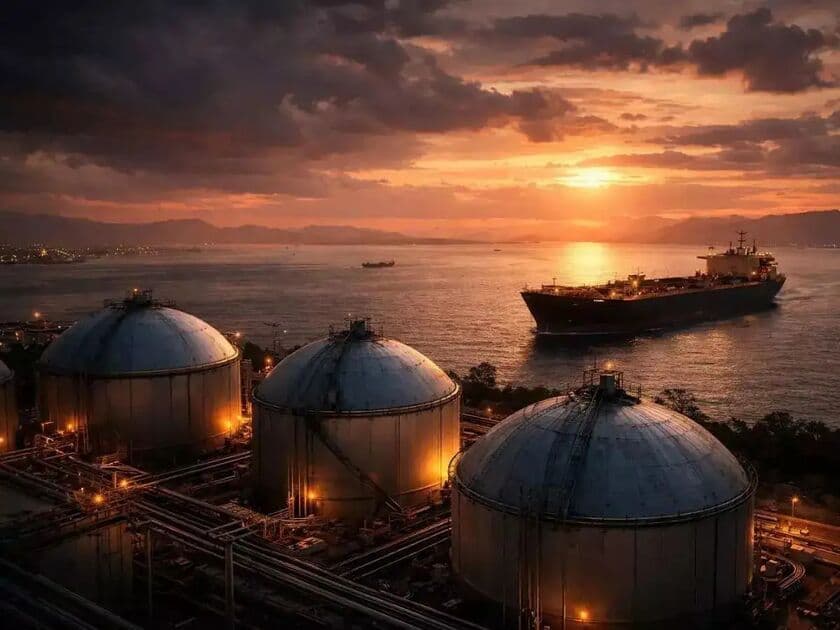
On April 2, 2026, the Brent spot price hit $141.36 per barrel, the highest level since the 2008 financial crisis. Five weeks earlier, the same barrel cost $63. The cause: the closure of the Strait of Hormuz by Iran's Islamic Revolutionary Guard Corps (IRGC), the largest oil supply disruption since the 1970s energy crisis.
For investors, the consequences are immediate: surging fuel prices, rising inflation, Petrobras at all-time highs, and a volatility window that could last months. This article organizes the data that matters.
What happened at the Strait of Hormuz
The Strait of Hormuz is a 33-kilometer-wide channel between Iran and Oman through which 20% to 31% of all seaborne oil passes, approximately 20 million barrels per day.
On February 28, 2026, the United States and Israel conducted coordinated airstrikes on Iran (Operation Epic Fury), targeting IRGC command centers, ballistic missile sites, navy ships, and submarines. Iran retaliated with missiles and drones against US military bases, Israeli territory, and Gulf states.
The escalation was rapid:
| Date | Event |
|---|---|
| Feb 28 | US and Israel launch airstrikes on Iran |
| Mar 1 | Oil tanker Skylight struck near Khasab, Oman: 2 killed |
| Mar 2 | IRGC officially confirms the strait is closed |
| Mar 4 | Iran declares the strait "closed" and attacks ships in transit |
| Mar 7 | IRGC hits US oil tanker Louis P with a drone |
| Mar 8 | Brent surpasses $100 for the first time in 4 years |
| Mar 9 | Brent hits $126; Trump announces intent to seize the strait |
| Mar 12 | 21 confirmed attacks on merchant vessels |
| Mar 19 | US begins military campaign to reopen the strait |
| Mar 26 | Israel kills Iran's top naval commander, Alireza Tangsiri |
| Mar 27 | IRGC closes the strait to US, Israeli, and allied vessels; Brent at $114 |
| Apr 2 | Brent spot price reaches $141.36 |
By March 12, Iran had carried out 21 confirmed attacks on merchant ships. Oil flow through the strait, previously around 20 million barrels per day, dropped to nearly zero.
The impact on oil prices
In March 2026, Brent posted its largest monthly percentage gain since the 1980s. The jump from $63 to $126 per barrel represented a 100% increase in just weeks.
| Reference | Price | Date |
|---|---|---|
| Brent (Q4 2025 average) | $63/barrel | Oct-Dec 2025 |
| Brent (breakout) | $100/barrel | Mar 8, 2026 |
| Brent (intraday peak) | $126/barrel | Mar 9, 2026 |
| Brent spot (physical peak) | $141.36/barrel | Apr 2, 2026 |
| Brent futures (June) | $109.03/barrel | Apr 2, 2026 |
| WTI futures (May) | $111.54/barrel | Apr 2, 2026 |
The $32.33 gap between the Brent spot price ($141) and the futures contract ($109) on April 2 reflects the distortion between the physical market, where oil is scarce, and the futures market, where traders price in the possibility of a ceasefire.
The International Energy Agency (IEA) warned on April 1 that April will be worse than March. Executive Director Fatih Birol explained: in March, there were still cargo ships carrying oil through the strait from before the blockade. In April, "there is nothing." Birol described the disruption of gas supplies from the conflict as exceeding the volumes lost when Russian gas flows were cut in 2022, calling it "the biggest disruption in history."
Ceasefire negotiations: where we stand
On April 1, Trump addressed the nation, saying "the war is nearly over" and vowing "extremely hard" strikes in the coming weeks. He extended a pause on strikes against Iranian energy plants until April 6, 2026, after Iran requested seven days and allowed several oil tankers through the strait.
Iran, however, rejected the US 15-point proposal and presented five conditions: end of US and Israeli attacks on Iran; end of attacks on pro-Iran forces in Lebanon and Iraq; mechanisms to prevent the resumption of war; compensation for damages; and international recognition of Iranian sovereignty over the strait.
The market is split. On the day of Trump's speech, oil fell temporarily on ceasefire hopes, then climbed back when it became clear that Iran's conditions are incompatible with the US position.
Fuel prices in Brazil: the ticking time bomb
Petrobras cut refinery gasoline prices by 5.2% in January 2026, from R$2.71 to R$2.57 per liter. That cut was made when Brent was at $63. Since then, the barrel has more than doubled, but Petrobras has not adjusted prices.
The result is a growing price gap:
| Fuel | Price gap (%) | Price gap (R$/liter) |
|---|---|---|
| Gasoline | 52% | R$1.61 |
| Diesel | 67% | R$3.05 |
Source: Abicom (Brazilian Association of Fuel Importers), March/April 2026.
The average gasoline price at the pump is R$6.78 per liter (March 30, 2026). If Petrobras were to fully pass through the oil price increase, the liter could exceed R$8.00.
Abicom warned of diesel shortages in April. Brazil imports approximately 30% of the diesel it consumes, and with the R$3.05/liter gap, private importers cannot compete with Petrobras's artificial pricing. Without new contracts closed in over ten days, imported diesel simply stops arriving.
Petrobras disputed the calculations and reaffirmed that its pricing policy does not automatically pass through international fluctuations, prioritizing "reducing volatility in the domestic market." The decision is technical but also political: 2026 is a presidential election year in Brazil.
Petrobras: the major beneficiary of the crisis
While consumers pay more, Petrobras investors are reaping significant returns. The combination of surging oil prices and a stock still priced for $65 Brent created a gap that the market corrected quickly.
| Metric | Value |
|---|---|
| PETR4 (start of 2026) | ~R$30.71 |
| PETR4 (current, April 2026) | ~R$48.15 |
| YTD appreciation | +60% |
| March appreciation | +14% |
| 28-day gain (since war began) | +25.6% |
| Market cap | R$673 billion (record) |
| 2025 net income | R$110.1 billion (+200.8% vs 2024) |
| Q4 2025 net income | R$15.6 billion |
| Q4 2025 dividends | R$8.1 billion |
| 2025 total dividends | R$41.2 billion |
Petrobras reached its tenth market cap record since the conflict began. In a single week in March, its market value increased by over R$50 billion.
What analysts are saying
BTG Pactual added PETR4 to its recommended April portfolio, replacing Prio (PRIO3). The rationale: even in a conservative scenario with Brent at $80 and no fuel price adjustment, Petrobras would deliver 9% free cash flow yield and 8% dividend yield in 2026. BTG is targeting post-war dividends.
Bradesco BBI downgraded from buy to neutral in February 2026, with a R$45 price target for PETR4. The bank projects 6.5% dividend yield for 2026, below the US oil company average (7%) and Vale (8%). Their argument: after a 60% rally, the return has become "excessively tight."
The ex-dividend date for the next payout is April 22, 2026, with payments in two installments: R$0.313 per share on May 20 and R$0.313 on June 22.
Inflation: the unavoidable side effect
Oil does not just affect the price at the pump. Transportation accounts for 20% of Brazil's IPCA inflation index. When diesel rises, freight costs increase, and everything that depends on logistics costs more: food, construction materials, industrial inputs.
The Central Bank's Focus Survey reflects this pressure:
| Indicator | Current projection | 4 weeks ago |
|---|---|---|
| IPCA 2026 | 4.31% | 3.91% |
| IPCA 2027 | 3.84% | 3.80% |
| Selic 2026 (year-end) | 12.50% | 12.50% |
| Exchange rate 2026 (year-end) | R$5.40 | R$5.40 |
The IPCA revision from 3.91% to 4.31% occurred over three consecutive weeks, driven directly by oil price increases. Brazil's inflation target ceiling is 4.50%, meaning the market is already working near the limit.
This scenario reduces the room for more aggressive Selic rate cuts. The Copom began cutting in March (from 15% to 14.75%), but the market now projects the rate ending 2026 at 12.50%, not lower, precisely because of oil-driven inflationary pressure.
What the current scenario teaches
Supply shocks are unpredictable and violent
No Wall Street analyst predicted in January 2026 that Brent would double in two months. Geopolitical rupture scenarios are, by definition, not modelable. An investor who concentrates in a single asset or sector is exposed to events beyond any fundamental analysis.
Commodities amplify volatility
Oil did not move linearly from $63 to $141. There were single-day moves of 11% (like April 2, when WTI rose $11.42 in one session) and sharp drops on ceasefire rumors. This amplitude creates opportunities but also destroys poorly sized positions.
Petrobras pricing policy is a political variable
The 52% gasoline and 67% diesel price gap shows that Petrobras does not operate purely on market logic. In an election year, full pass-through is politically unfeasible. This protects consumers short-term but compresses importer margins and creates shortage risk.
Dividends depend on the macro scenario
The R$41.2 billion in 2025 dividends were generated with an average Brent of $63. If the barrel stays above $100, Petrobras's 2026 cash flow will be significantly higher, potentially translating into extraordinary dividends. But if the war ends and Brent returns to $70, projections change. Dividends are a consequence of results, not a guarantee.
Inflation is the silent tax
When IPCA rises from 3.91% to 4.31% in three weeks, the purchasing power of the real declines. Cash sitting in a checking account loses real value. Post-fixed instruments (CDI, Tesouro Selic) offer partial protection, but full protection against commodity-driven inflation requires diversification into real assets.
For traders, volatility is the environment
Single-day WTI moves of 11%, daily Brent oscillations between $109 and $141, and Petrobras shares up 25% in 28 days. This level of volatility is uncommon and will not last forever, but while it persists, it creates a rich environment for short-term operations.
At Royal Binary, the professional trading team monitors geopolitical scenarios like this daily. Sidnei Oliveira, founder of the platform and a trader since 2019, tracks operations with daily records on Telegram and updates on Instagram. Volatility driven by conflicts, monetary policy decisions, and supply shocks is part of the environment the team navigates with discipline and risk management.
Want to understand how professional trading works? Explore the platform and learn about our plans.