

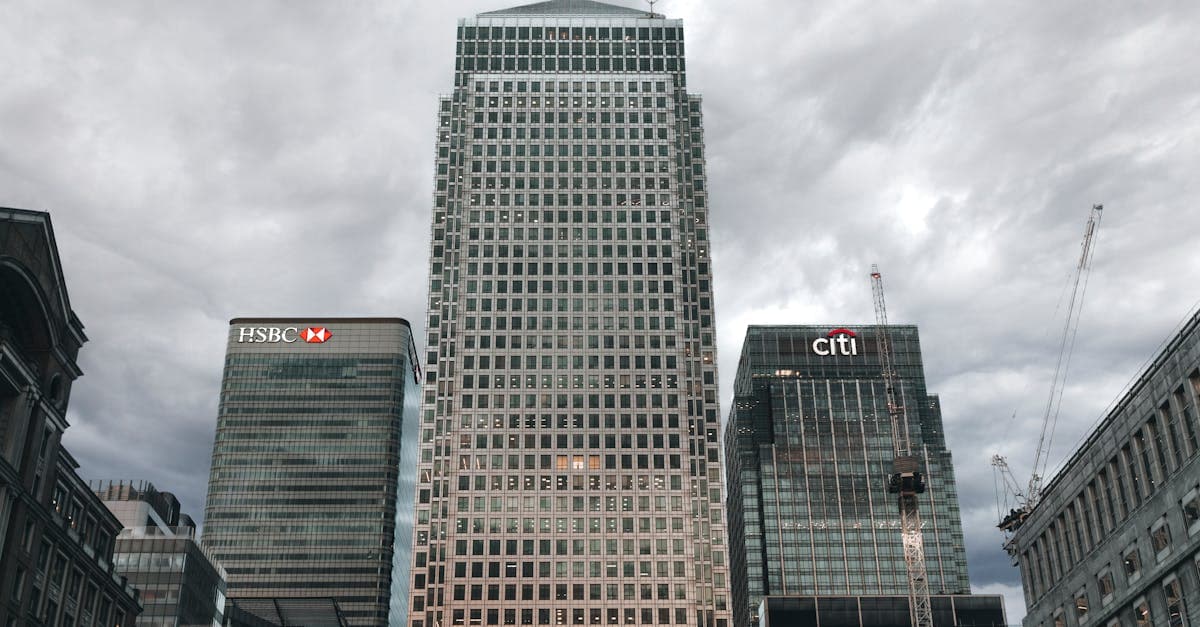
Brazil's Q1 2026 earnings season kicked off on April 14, when Romi (ROMI3) released its numbers. The weeks ahead bring the results that matter most to the financial sector: Itaú Unibanco (ITUB4), Bradesco (BBDC4), and Santander Brasil (SANB11) are all expected to report in the first half of May, with Itaú and Bradesco likely on the same day around May 5.
These three institutions together account for a substantial portion of the Ibovespa's weight and are central to any assessment of the Brazilian financial sector. Their Q1 2026 results arrive in a complex environment: falling interest rates, record-high delinquency, and a credit market expanding selectively. Understanding what each bank prioritizes — and where the risks remain — is what turns a surface-level read into a grounded analysis.
The Macro Context Framing the Results
Before examining each bank, it helps to frame the environment in which they operated during the first quarter.
Selic rate cut to 14.75%. Brazil's Monetary Policy Committee (Copom) reduced the benchmark Selic rate to 14.75% on March 18, 2026. The easing cycle follows a prolonged period of elevated rates, and the market consensus, per the Focus bulletin, points to a Selic around 12.25% by year-end 2026. For banks, falling rates are a double-edged dynamic: they stimulate credit demand (positive for volume) while compressing net interest margins (negative for NIM in the short term).
Delinquency at record levels. According to Serasa Experian, 81.7 million Brazilians were in default at the start of 2026, with R$ 539 billion in overdue debt. Non-mortgage credit already represents 31.22% of household income — a historically elevated ratio that creates stress for consumer credit portfolios. This is the backdrop against which to read each bank's provision for loan losses (PDD in Portuguese) in the Q1 2026 reports.
Ibovespa near 200,000, with banks leading. The financial sector was one of the main drivers of the Ibovespa's 2026 rally, supported by approximately R$ 65 billion in foreign inflows year-to-date and optimism around the rate-cutting cycle. Banks enter the Q1 2026 earnings season with valuations that are already elevated relative to recent averages — raising the bar for what the market will accept as a "good" result.
Itaú Unibanco (ITUB4): The Sector's Efficiency Benchmark
Itaú closed 2025 with recurring net income of R$ 46.8 billion, a 13.1% increase over 2024, and a return on equity (ROE) of 23.4% — the highest among large Brazilian private banks and a reference point for the sector. In Q4 2025, net interest income with clients (NII-clients) reached R$ 30.9 billion, growing 8.6% year-over-year, driven by mortgage credit, credit cards, private payroll loans, and government-backed SME programs.
For 2026, Itaú's guidance projects full-year profit growth of roughly 7 to 9%, implying results close to R$ 51 billion — a new record. Market NII (treasury operations) should benefit from falling rates, while client NII depends on the pace of loan book growth.
What to watch in Q1 2026:
- Loan book growth: Itaú has been accelerating in mortgage, credit card, and private payroll lending. Growth above 7% in the total portfolio would be consistent with the annual guidance.
- NIM (net interest margin): with the Selic declining, net interest margins tend to compress modestly. The key question is whether the compression is within what the bank's models anticipated.
- Provisions and NPL: Itaú has historically maintained NPL ratios below its peers through a higher proportion of collateralized credit. Any meaningful uptick in the non-performing loan ratio would be a red flag.
- Capital adequacy (Basileia ratio): the bank closed 2025 with a Basel ratio of 17.4%, providing wide buffer above the regulatory minimum. This supports both loan growth and shareholder returns.
- Dividends and JCP: in February 2026, the Board of Directors approved R$ 3.85 billion in interest on net equity (JCP) payments to shareholders. Q1 2026 will add a new round of distributions. Itaú's historical yield makes ITUB4 a relevant name for income-focused investors.
Itaú enters Q1 2026 as the best-positioned of the three banks analyzed here. The primary risk is a negative surprise in provision expenses, which could compress ROE below expectations.
Bradesco (BBDC4): A Turnaround in Progress
Bradesco spent the past two years in reconstruction mode. The starting point was 2023, when the bank reported a ROE of 7% — well below its cost of capital — and announced a broad restructuring plan under CEO Marcelo Noronha.
The progress has been faster than the market expected. In Q4 2025, ROE reached 15.2%, crossing above the cost of capital for the first time since the turnaround began. The bank closed 2025 with net income above R$ 24 billion and a full-year ROE of approximately 14.9%.
For 2026, Bradesco's guidance targets net profit near R$ 27.5 billion — 11.4% growth over 2025 — with a projected ROE of 15.3%.
What to watch in Q1 2026:
- ROE trajectory: the central question for the market is whether Bradesco can sustain and expand ROE quarter after quarter. Q1 2026 is the first test of the year after the Q4 2025 inflection. A sequential decline in ROE would raise doubts about the durability of the recovery.
- Credit mix and provisions: Bradesco had significant exposure to higher-risk segments (unsecured personal loans, small and mid-size businesses) that were the main source of deterioration in the previous cycle. How delinquency in those portfolios evolves in Q1 2026 is a critical data point.
- Service revenues and fees: one of the levers of the turnaround is diversifying revenue beyond NII. Banking fees, insurance (through Bradesco Seguros), and asset management are meaningful sources of income that are not interest-rate sensitive.
- Efficiency ratio: the bank has been investing in automation and process simplification. An efficiency ratio below 45% would signal that costs are being managed effectively.
- Retail versus private banking: Bradesco operates both a mass-market retail network and a high-net-worth private banking segment. The composition of the client mix directly affects the product mix and the delinquency profile.
Bradesco is the bank with the highest potential for a positive surprise in Q1 2026 — but also the one that carries the most uncertainty. A result that confirms the turnaround's continuity could lift BBDC4; a negative surprise in provisions or ROE may frustrate investors who positioned for the recovery.
Santander Brasil (SANB11): Reorganization Focused on Profitability
Santander Brasil is at a different stage than the other two: not a full turnaround like Bradesco, nor with the consolidated strength of Itaú. It is an internal reorganization with a clear focus on profitability — even if that means growing more slowly than its rivals.
In Q4 2025, the bank reported net income of R$ 4.1 billion and a ROE of 17.6% — its best result in four years. For the full year 2025, accumulated profit reached R$ 15.6 billion, a 12.6% increase over 2024. The bank has already announced R$ 2 billion in JCP for 2026.
The CEO's strategy is explicit: less credit to lower-income and agribusiness segments, more focus on high-income clients and collateralized credit. Between 2024 and 2025, Santander closed 585 branches and cut 2,200 positions as part of a cost reduction and operational simplification drive. The target ROE above 20% remains in the medium-term horizon.
However, BTG Pactual has projected weaker results for Santander in Q1 2026, placing the bank in a position of higher relative uncertainty heading into the reporting period.
What to watch in Q1 2026:
- Asset quality: the recent Achilles' heel for Santander Brasil has been portfolio quality, particularly in retail consumer credit. Q4 2025 raised delinquency concerns even alongside strong profit. Q1 2026 will indicate whether that trend is worsening or stabilizing.
- Selective loan book growth: the bank projects loan book growth of 5–6% in 2026 — below its peers. Growth below that range in Q1 2026 is not necessarily negative if accompanied by better margins.
- Client margins: Santander has guided for client margins to advance between 3% and 4% in 2026. The Q1 2026 figure will show whether the bank is on track.
- Service revenues: part of the Santander recovery thesis rests on growing non-interest income through insurance, FX, and wealth management, reducing dependence on pure spread income.
- Progress toward the 20% ROE target: Santander is the only one of the three to have publicly stated a ROE above 20% as a medium-term objective. Q1 2026 is a reference point to assess distance traveled.
Reading a Bank's Earnings Report: Line by Line
Regardless of the bank, quarterly results in the financial sector follow a standard structure. Knowing where to look first saves time and avoids superficial readings:
| Line Item | What It Reveals |
|---|---|
| NII (Gross Financial Margin) | Intermediation revenue — sensitive to Selic and loan volume |
| NIM (Net Interest Margin) | Efficiency in funding and loan deployment |
| PDD / Loan Loss Provisions | Cost of risk — rises with delinquency |
| NPL (Non-Performing Loans) | % of portfolio in arrears — leading indicator |
| Fee and Service Revenues | Diversification; independent of interest rates |
| Efficiency Ratio | Costs over revenues — lower is better |
| ROE | Return on equity — benchmark for value creation |
| Basel Ratio | Capital strength — capacity to grow and return capital |
In rate-cutting cycles like the current one, NIM tends to compress in the short term while loan volume grows. The market will penalize banks that fail to show loan book growth, even if margins compress modestly.
Dividends and Share Buybacks
With healthy capital positions, the theme of shareholder returns takes on added relevance in Q1 2026.
Itaú has the most robust distribution policy: historically, it distributes close to 50% of net income between dividends and JCP, with a consistent yield. Share buybacks were intensified in 2025, supported by the comfortable 17.4% Basel ratio.
Bradesco was more conservative on distributions during the restructuring period. As ROE consolidates above the cost of capital, the room to increase the payout grows. This could be a catalyst for BBDC4 in 2026.
Santander Brasil has already committed R$ 2 billion in JCP for 2026 — a signal of confidence in cash generation. The yield on SANB11 tends to be more variable, reflecting the ongoing reorganization phase.
The Earnings Calendar and How to Follow It
Disclosures are expected in the first half of May. Itaú and Bradesco have a history of reporting simultaneously, frequently on the same day, with Santander in the same window.
The standard earnings follow-up sequence includes:
- Press release: typically published before markets open or after the close, containing headline numbers
- Results presentation: a more detailed document with line-item breakdowns and management commentary
- Earnings call: usually the same or following day — this is where the market looks for guidance signals and reads the executives' tone
For long-term investors, a single quarter is rarely decisive. What matters is the consistency of the trajectory: loan book growth within guidance, provisions stable or declining, sustainable ROE, and adequate capital.
Retail Banking Versus Private Banking: The Revenue Mix Shift
One distinction that Q1 2026 results will illuminate: the profitability gap between retail and high-net-worth clients.
The private banking segment — clients with assets above R$ 1 million — is more profitable per unit of capital deployed: lower delinquency, higher average ticket on investment products, and less dependence on revolving credit. Itaú (through Itaú Private Bank) and Bradesco (through Bradesco Prime and Private) have mature operations in this space. Santander is accelerating its repositioning in that direction.
As the rate cycle normalizes and pure spread income compresses, banks most dependent on consumer lending to lower-income segments will face greater margin pressure. Those that have shifted toward a more balanced mix of NII and fee-based income will emerge in a stronger position.
Royal Binary is a managed trading platform founded by Sidnei Oliveira, former non-commissioned officer in the Brazilian Air Force with over six years of professional market experience. This content is informational and does not constitute investment advice. For those seeking a professionally managed complement to a portfolio that includes bank stocks, learn how we operate.
Past results do not guarantee future returns. Consult a certified advisor before making financial decisions.