

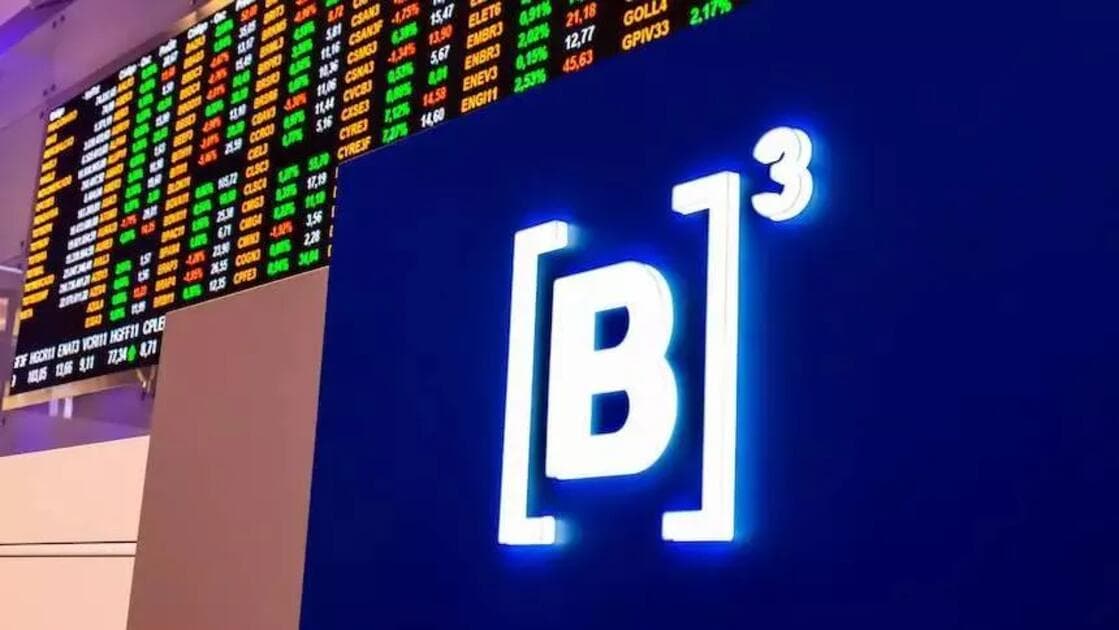
Latin America's largest stock exchange is about to launch its own digital currency. B3 has confirmed it will issue a stablecoin in the first half of 2026, making it the first capital market infrastructure in the Western Hemisphere to create its own digital asset for settlement and operations. This move is not isolated. It is happening in a Brazil where stablecoins already account for 90% of all crypto asset volume traded, where the country holds the 5th position globally in stablecoin adoption, and where the Central Bank has just established the most comprehensive regulatory framework in the history of Brazil's digital asset market.
For investors accustomed to government bonds, investment funds, and equities listed on B3, what is happening is not a crypto revolution. It is a transformation of the very financial infrastructure that underpins their investments.
What B3 is building
B3's stablecoin is not a speculative experiment. It is a piece of infrastructure. The exchange plans to use the digital asset for settlement of operations involving tokenized assets, transfers between market participants, and as a common denominator for smart contracts within B3's own ecosystem.
The choice to issue its own stablecoin, rather than adopting an existing one like USDT or BBRL, is telling. B3 understands that control over the settlement currency means control over the infrastructure. Whoever sets the rules of the stablecoin sets the rules of the market that operates on top of it.
From a practical standpoint, B3's stablecoin enables an agenda the exchange has been building toward for years:
- Tokenization of real assets. Equities, debentures, fund shares, and other securities can be represented as tokens on a blockchain, with real-time settlement instead of the current T+2 cycle.
- Fractional access. Assets that today require minimum investments of thousands of reais can be fractioned into lower-denomination tokens, broadening retail investor access.
- 24/7 operations. Unlike traditional trading sessions, tokenized blockchain assets have no operating hours, enabling continuous trading.
- Automation via smart contracts. Dividend payments, option exercises, and portfolio rebalancing can be programmed to execute automatically.
Info
B3's stablecoin is not a crypto asset for speculation. It is a settlement instrument for the capital market. Just as the digital real (Drex) is designed for the interbank banking system, B3's stablecoin was designed for the securities ecosystem.
Brazil is already a stablecoin market
Before understanding where the market is going, it is necessary to understand where it already is. Brazil does not need to learn to use stablecoins. The country has been using them at scale for years — but in a way that surprises those familiar with international crypto markets.
While in the US and Europe the crypto ecosystem is diversified across Bitcoin, Ethereum, DeFi, and NFTs, Brazil has a radically different profile. According to data from the Federal Revenue Service, stablecoins account for up to 90% of all reported crypto transactions in the country. USDT (Tether) dominates, representing about two-thirds of the total. Monthly volume ranges between $6 and $8 billion.
| Indicator | Value |
|---|---|
| Stablecoin share of national crypto volume | Up to 90% |
| Brazil's position in global adoption ranking | 5th |
| Monthly reported transaction volume | $6 to $8 billion |
| Global stablecoin market projected for 2026 | $500 billion (Mercado Bitcoin) |
| BRL1 in circulation (real-backed stablecoin) | R$ 6.3 million |
The reason for this concentration in stablecoins is simple: Brazilians use USDT to protect themselves against real depreciation. With the exchange rate oscillating around R$ 5.80 to R$ 6.20 in recent months, buying dollar-denominated stablecoins is the fastest, cheapest, and most accessible way to dollarize part of one's wealth without opening an overseas account, paying a 2-3% bank spread, or dealing with foreign exchange bureaucracy.
This collective behavior makes Brazil a unique case: the largest stablecoin market in the world in relative terms of adoption within a single non-English-speaking country.
The regulation that arrived in February 2026
The landscape gained a new structural pillar on February 2, 2026, when Central Bank Resolutions 519, 520, and 521 came into force. These rules constitute the most comprehensive regulatory framework ever produced for digital assets in Brazil, and their effects are spreading throughout the market.
What changed:
Stablecoins are now foreign exchange transactions. Buying, selling, or transferring stablecoins pegged to foreign currencies is now treated the same as a traditional foreign exchange transaction. This does not prohibit their use, but establishes a set of compliance, identification, and anti-money-laundering rules that platforms and users must follow.
Mandatory licensing. Exchanges, custodians, and intermediaries must register as Virtual Asset Service Providers (SPSAVs) with the Central Bank, with a final compliance deadline of November 2026. Those who fail to comply will be required to cease operations.
Elevated minimum capital. Requirements vary by activity type: R$ 37.2 million for exchanges, R$ 18.6 million for custodians. These figures are considerably higher than those proposed during the public consultation period, signaling that the Central Bank wants a well-capitalized market with genuine risk-absorption capacity.
Reporting of international transactions from May 2026. Stablecoin transactions involving cross-border transfers will be mandatorily reported, creating fiscal visibility over flows that were previously opaque.
Warning
The classification of stablecoins as foreign exchange transactions has practical implications. Transactions that were previously treated as simple digital asset purchases now follow foreign exchange rules. For investors, this means the platform where you operate must be in compliance. Before continuing to use any exchange, verify that it is in the process of adapting to the Central Bank's new rules.
Real-backed stablecoins: an emerging market
Beyond B3's stablecoin and the dominance of USDT, a market for Brazilian real-backed stablecoins is emerging. Two projects deserve attention for their institutional legitimacy:
BRL1. The real-backed stablecoin issued by Mercado Bitcoin, Brazil's largest exchange, already has R$ 6.3 million in circulation. Unlike projects with no backing, BRL1 is issued by a regulated company with periodic reserve audits. It represents an intermediate model between the dollarized USDT and the government's Drex, allowing investors and companies to move value in reais with the speed and programmability of a digital asset.
BBRL. Banco Braza, one of Brazil's largest foreign exchange banks, launched BBRL on the Polygon blockchain in February 2026. Fully backed by reais and audited, BBRL targets corporate cross-border payments, where the traditional banking system charges between 2% and 5% spread to convert reais to dollars and back.
These projects are not direct competitors to B3's stablecoin. They occupy different niches: BRL1 and BBRL serve the foreign exchange and payments market, while B3's stablecoin targets securities settlement. Together, they signal that Brazil is building a digital currency infrastructure layer parallel to the traditional banking system.
What changes for the traditional investor
The Brazilian investor who has never purchased a crypto asset may be wondering why this is relevant to them. The answer lies in the structure of the investments they already hold.
Investment funds will tokenize shares. Tokenizing fund shares enables instant settlement and secondary market trading without the restrictions of current redemption periods. Funds that today have D+30 or D+60 liquidity will be tradeable like equities, with real-time pricing.
Tokenized debentures and CRIs/CRAs. Private credit instruments that currently require high minimum investments and have illiquid secondary markets will be fractioned and tradeable with the same ease as a share. This democratizes access to instruments that today are restricted to qualified investors.
Automatic dividends and distributions. Smart contracts can automate the payment of earnings directly to the investor's wallet, eliminating the current T+2 cycle and reducing dependence on intermediaries for income distribution.
Integrated custody. Tokenized assets can be held in custody directly by B3, eliminating the local custodian layer and reducing operational costs throughout the chain.
| Current structure | With tokenization via B3 |
|---|---|
| Settlement in T+2 | Instant settlement (T+0) |
| Fund shares with redemption periods | Shares tradeable on secondary market |
| Debentures with high minimum lots | Debenture fractions accessible to retail |
| Dividends via banking cycle | Automatic earnings via smart contract |
| Limited trading hours | 24/7 trading of tokenized assets |
The risks that need to be stated
The tokenization narrative is compelling. But it comes with real risks that any investor needs to understand before taking a position.
Technology risk. Smart contracts have vulnerabilities. In 2024, losses from smart contract bug exploits in global markets exceeded $1.8 billion. B3 and the Central Bank are aware of this, and the design of Brazilian solutions prioritizes security over speed to market, but the risk is not zero.
Regulatory risk. The debate over stablecoin taxation via IOF was postponed in March 2026 due to industry pressure, but has not been resolved. In an election year, the government may revisit the issue. A 3.5% IOF rate on stablecoin transactions would materially alter the cost equation for those using these instruments as currency hedges.
Liquidity risk. Tokenized assets in early stages may have very illiquid secondary markets. The ease of fractionation does not guarantee there will be buyers when you want to sell.
Custody risk. The custody of digital assets is fundamentally different from the custody of traditional securities. Lost private keys, misconfigured contracts, or platform failures can result in permanent loss of assets.
Warning
Digital assets and stablecoins are not covered by the Credit Guarantee Fund (FGC). Central Bank regulation reduces systemic risks, but does not guarantee that no service provider will fail or that no smart contract will malfunction. Diversification and position sizing are irreplaceable risk management tools.
How to position yourself amid this transformation
The digital transformation of the Brazilian capital market is not a future event. It is a process already underway, with pieces being placed on the board right now. Some practical guidance for navigating this landscape:
Understand what you already use before adopting the new. If you use USDT as a currency hedge, make sure the exchange where you operate is in the process of complying with Resolutions 519, 520, and 521. Platforms that fail to comply may be required to cease operations in November 2026.
Follow the regulatory calendar. May 2026 brings mandatory reporting of international transactions. November 2026 is the final deadline for licensing. December 2026 is the expected horizon for the first tokenized products available to retail investors via B3.
Do not confuse infrastructure innovation with speculation. B3's stablecoin and tokenization projects are changes to the plumbing of the capital market, not assets for speculation. An investor trying to buy B3's stablecoin expecting price appreciation is confusing a settlement instrument with a risk asset.
Think about access, not the asset. The real value of tokenization for retail investors lies in access to asset classes that were previously inaccessible: fractions of high-quality debentures, private credit fund shares with genuine liquidity, and exposure to international assets without foreign exchange bureaucracy. That is the concrete opportunity.
Diversification remains the central principle. Stablecoins as currency protection, fixed income for stability, equities for growth, real assets for decorrelation. No technological innovation replaces the logic of diversification. What changes is the set of instruments available for each asset class.
How Royal Binary follows this movement
At Royal Binary, we closely follow structural transformations in the Brazilian financial market because they affect the environment in which we operate and the opportunities we identify for our investors. The tokenization of assets and the digitalization of B3's infrastructure are not abstract trends: they are changes that alter transaction costs, market liquidity, and the risk profile of different instruments.
With more than 340 operations per month and a methodology built over more than 6 years of Sidnei Oliveira's experience in the financial market, we operate with active management and genuine alignment of interests. The 50/50 profit split means we only win when the investor wins. We operate with full transparency, registered under CNPJ 64.020.950/0001-60, headquartered at Avenida Paulista, 807, São Paulo.
Past results do not guarantee future results. Returns are variable income.
Tip
Want to understand how Royal Binary's managed operation works within this new market landscape? Explore our plans and operational history at app.royalbinary.io.